By Jeff Keen ·
The short answer
Salt air settles on concrete, soaks into anything left unsealed, and works on the color, the surface and the steel inside. On the Coastal Bend the sealer is the main line of defense: a quality sealer put down on a dry slab, a non-slip additive where it gets wet, a rinse now and then, and a re-seal before the old coat wears through.
What salt does to concrete
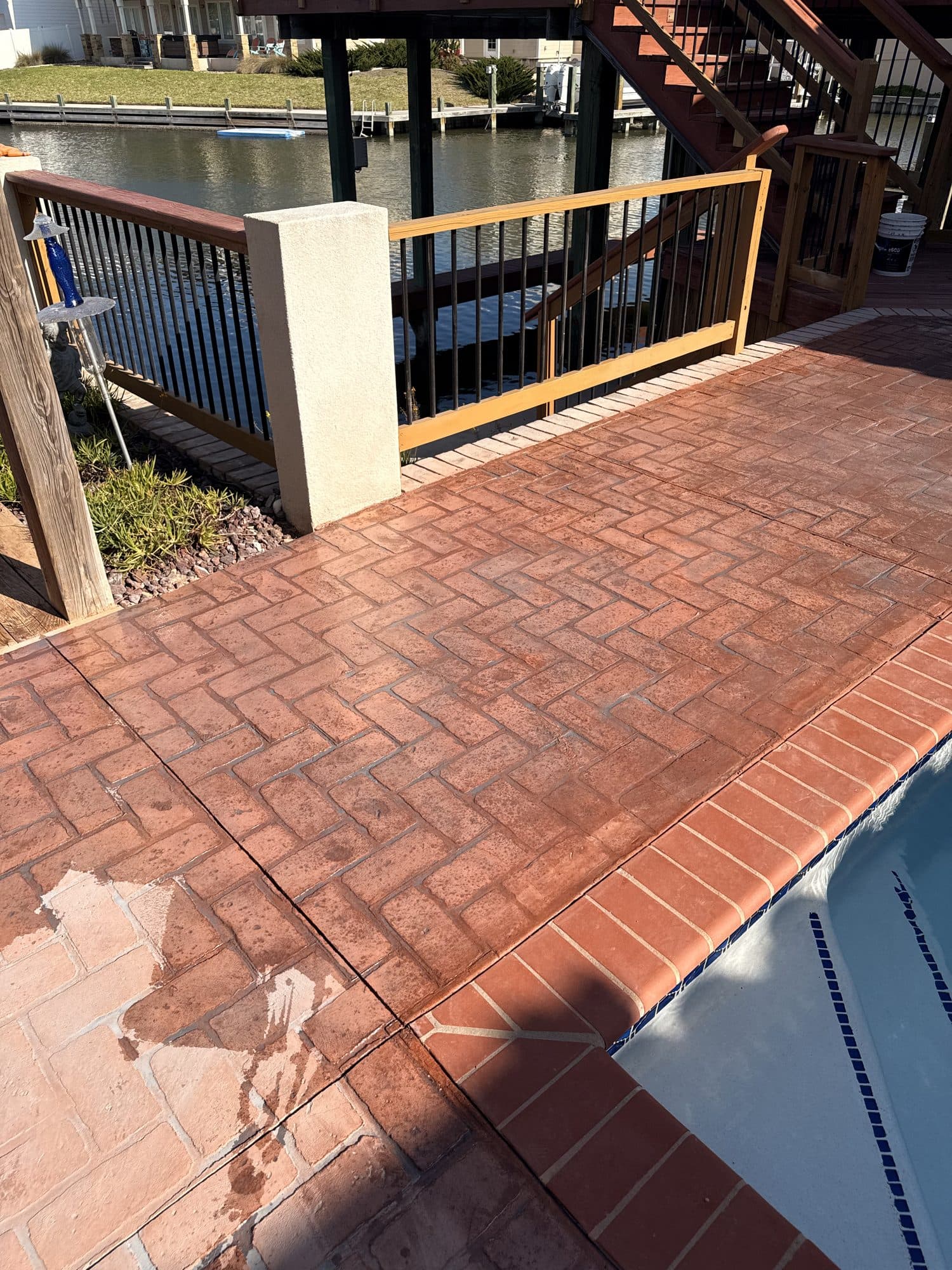
Concrete looks solid, but it is full of tiny pores. Near the bay, wind carries a fine salt mist that settles on every patio, pool deck and driveway, and rain and sprinklers wash it into those pores.
On an unsealed slab that salt dulls the color, leaves a white haze and roughens the surface over time. Worse, salt that works its way deep enough can reach the reinforcing steel and start it rusting from the inside. That is why, close to the water, a sealer and proper cover over the steel are not upgrades — they are the job.
What a good coastal sealer looks like
Every stained and stamped slab we finish gets an EZ Chem solvent-based acrylic sealer. It is a higher-solids product than the thin box-store sealers, so it leaves a thicker coat behind, and because it is solvent-based it bites into the concrete and carries the color deeper.
- Put down on a dry slab only — sealer over trapped moisture fails or turns milky white, so if the concrete is damp we come back another day.
- A non-slip additive mixed into the coat anywhere people walk wet: pool decks, shaded patios and steps.
- On sprayed cool decks, a Color Seal H2Cool color coat does the protecting and keeps the deck cooler underfoot.
Easy care that keeps the salt off
Most of coastal care is just not letting salt and grime sit:
- Rinse the slab with a hose now and then, especially after a windy stretch or a storm.
- Use a mild pH-neutral cleaner made for decorative concrete for a deeper clean.
- Skip muriatic acid and acidic cleaners — they strip color and sealer.
- Keep a pressure washer back and on a low setting; close-up and high, it cuts through sealer.
- Do not let pool chemicals or spilled shock sit on the deck.
Signs it is time to re-seal
Sealer is the part that wears, not the color. You will know it is time when water stops beading, the color looks flat or chalky next to a sheltered corner, or spills start leaving marks. Full-sun and high-traffic areas go first.
On the Coastal Bend we generally look at re-sealing every two to three years, sooner on a slab that bakes in full sun or takes salt spray. Your care sheet gives the interval for your job, and we re-seal work we poured and work we did not.