Acid Stain & Sealers
Acid-stained concrete floors, patios and walkways
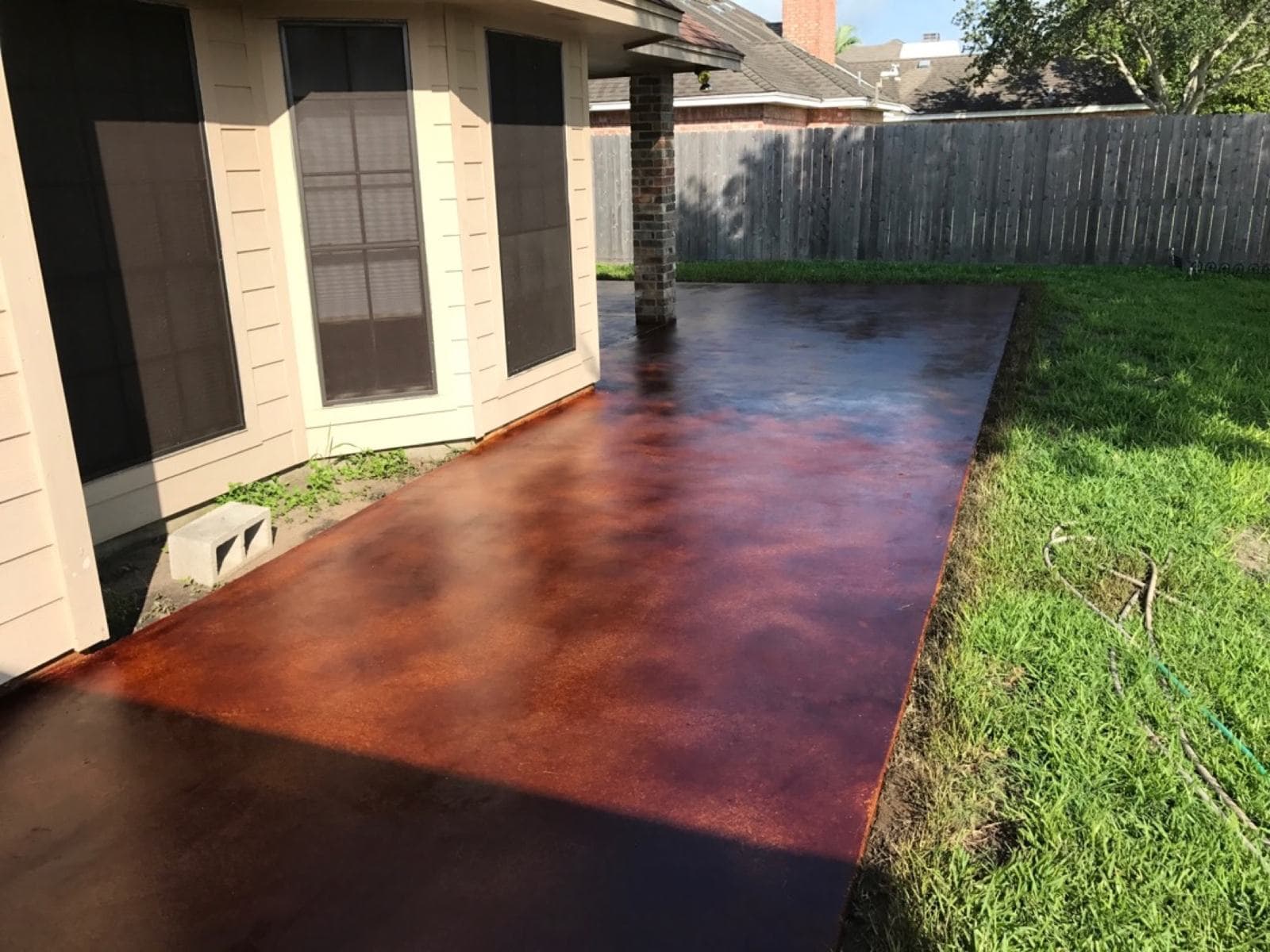
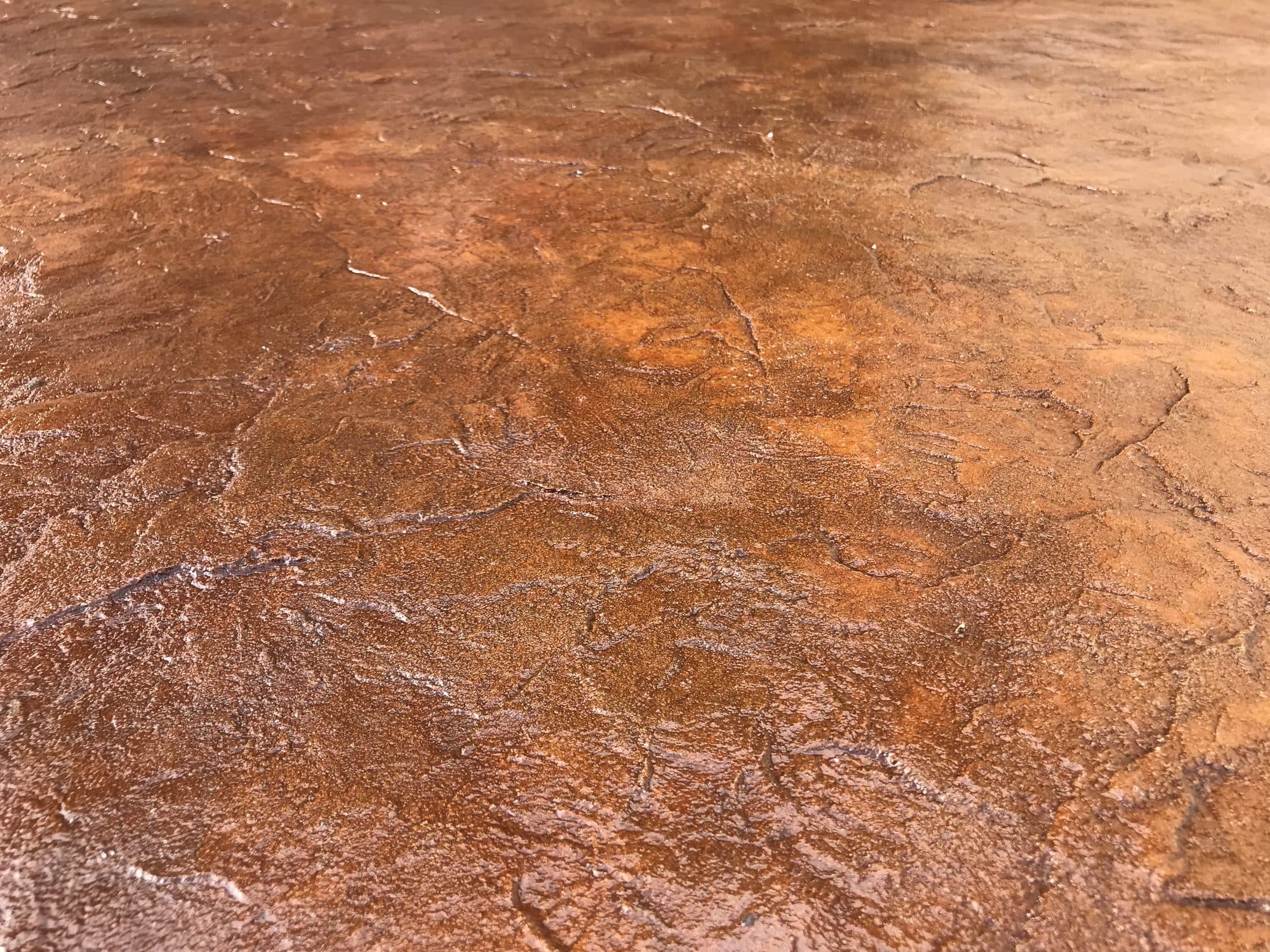
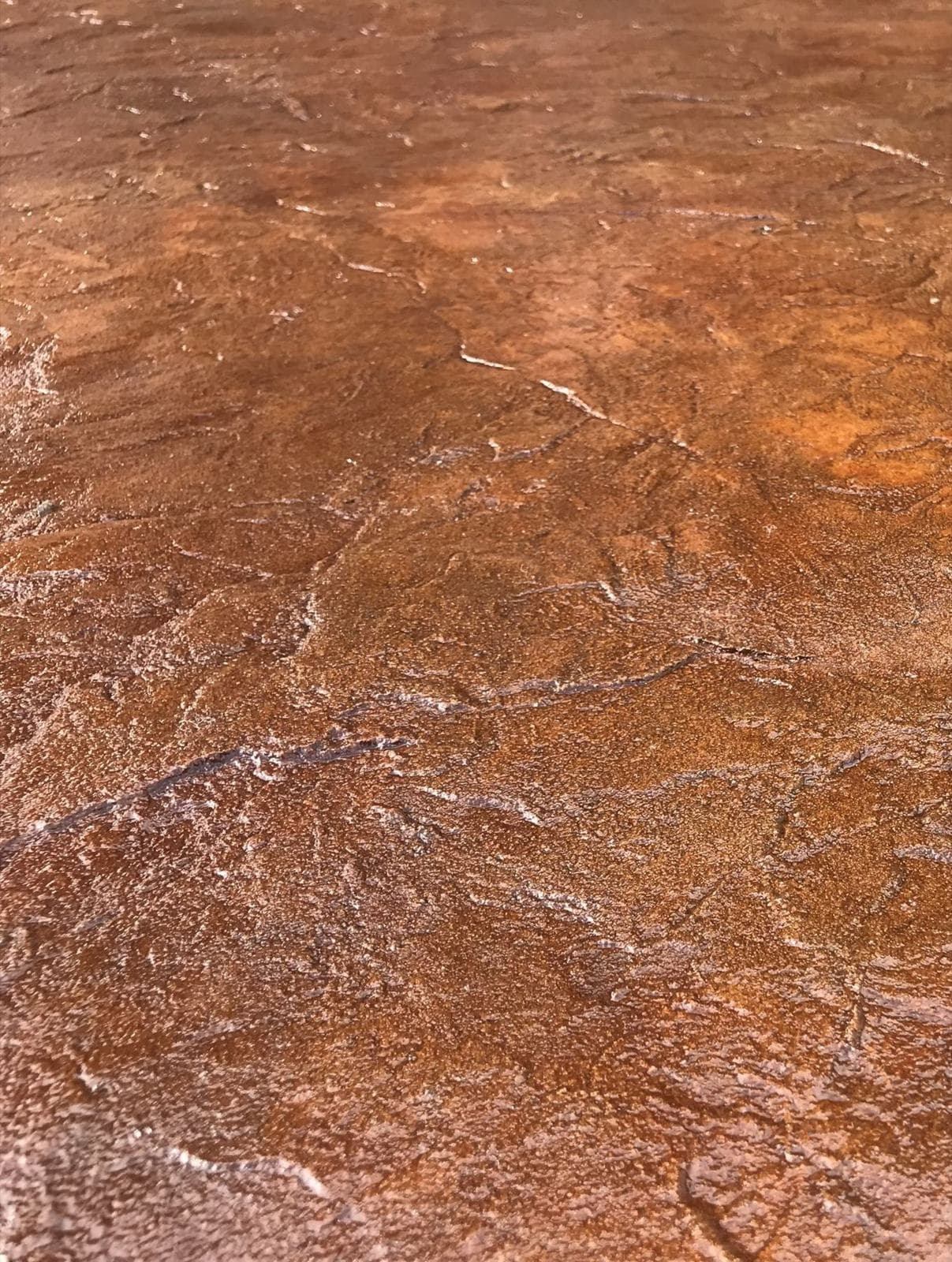
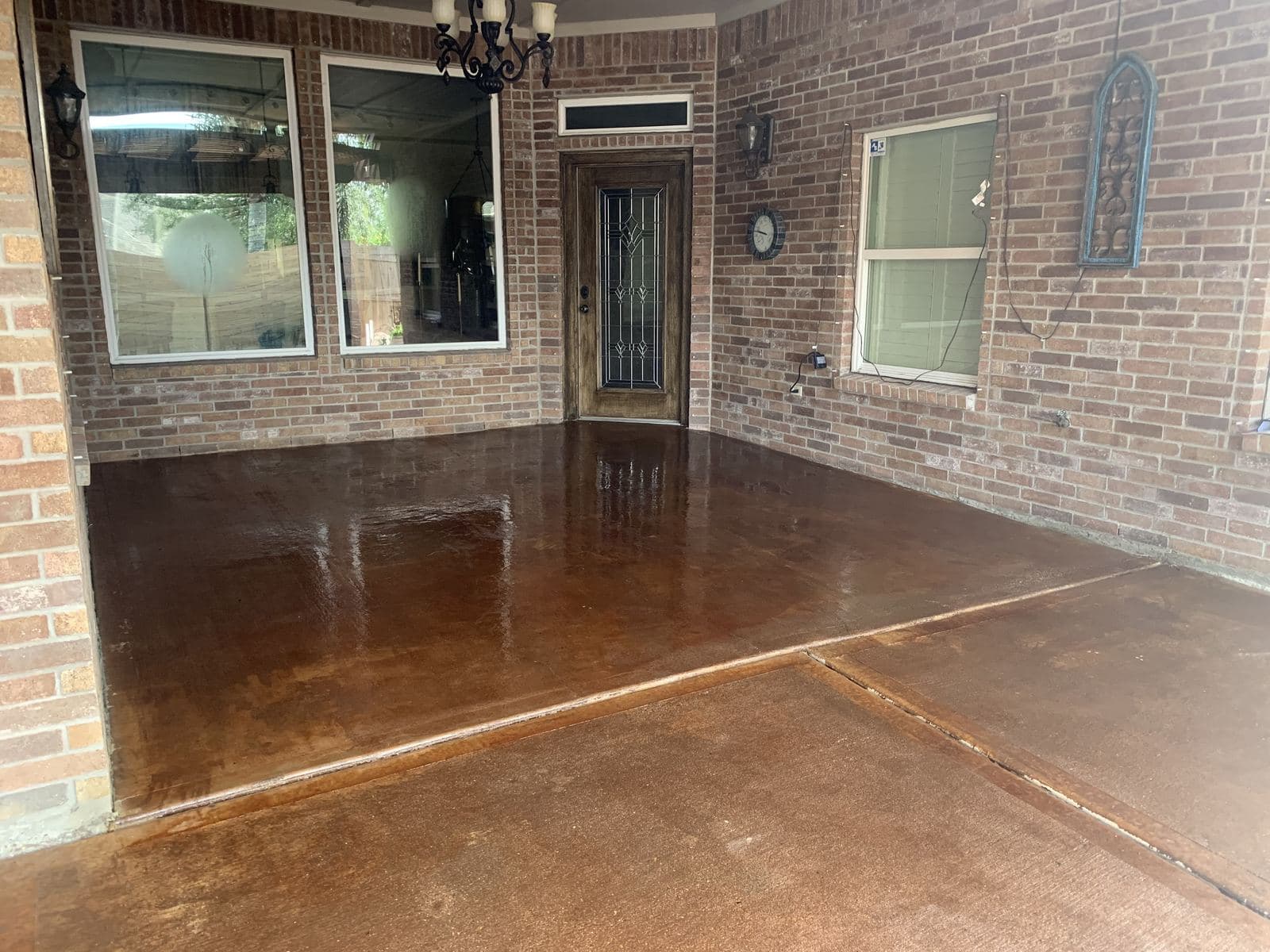
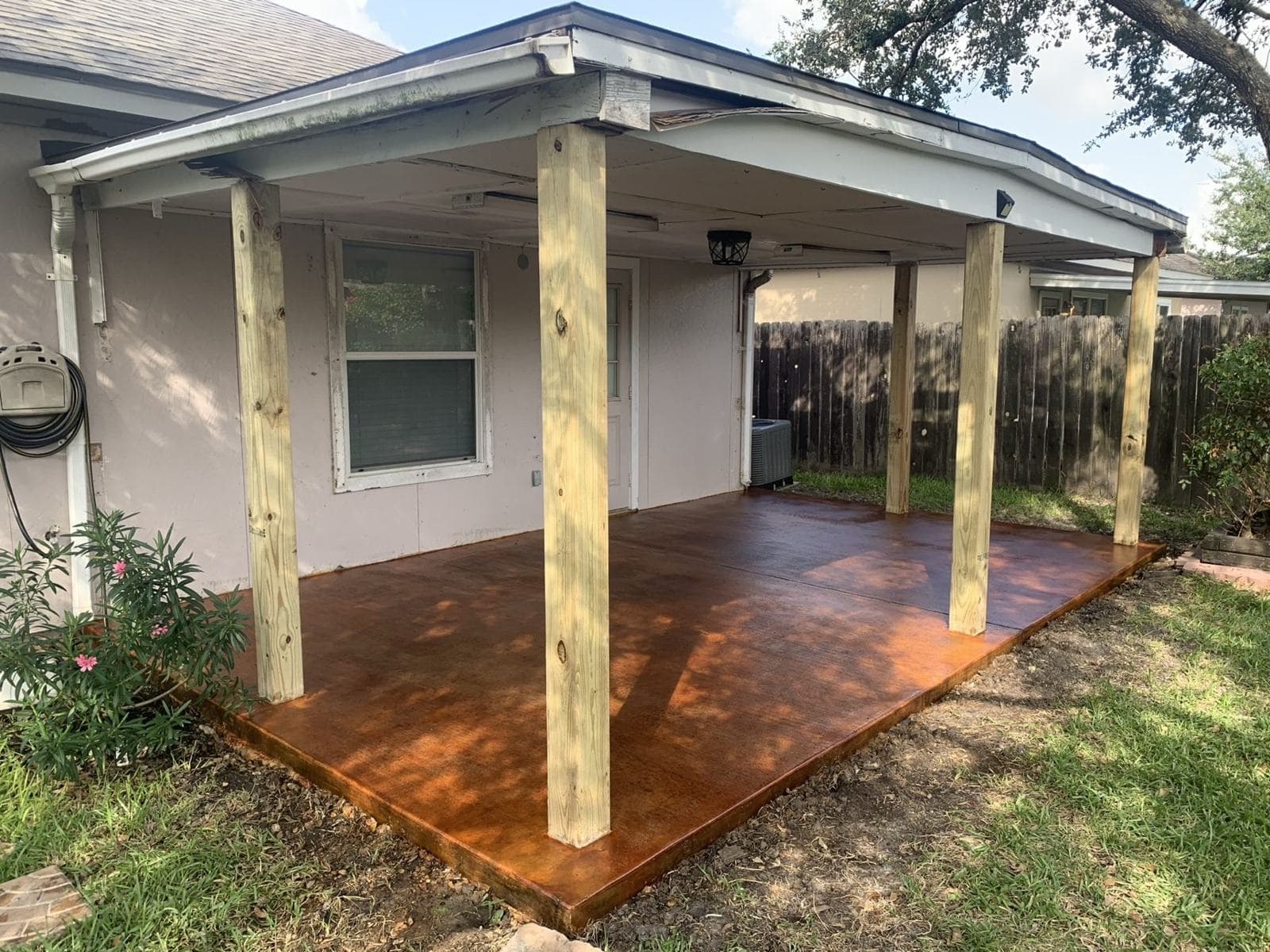
Acid stain reacts with the concrete itself instead of sitting on top of it. The color is in the slab — mottled, translucent and different in every square foot, like stone rather than paint.
Why homeowners pick Keen for this
It cannot peel
Stain is a chemical reaction inside the concrete, not a coating. Paint and solid-color sealers flake; a proper acid stain does not.
Earth Tones color line
We work in the EZ Chem Earth Tones and Enviro Stain lines and can put actual sample chips on your slab before you commit to a color.
Works on concrete you already have
If your existing slab is sound, staining is the cheapest way to transform it — no tear-out, no new pour, done in days.
Where acid stain shines
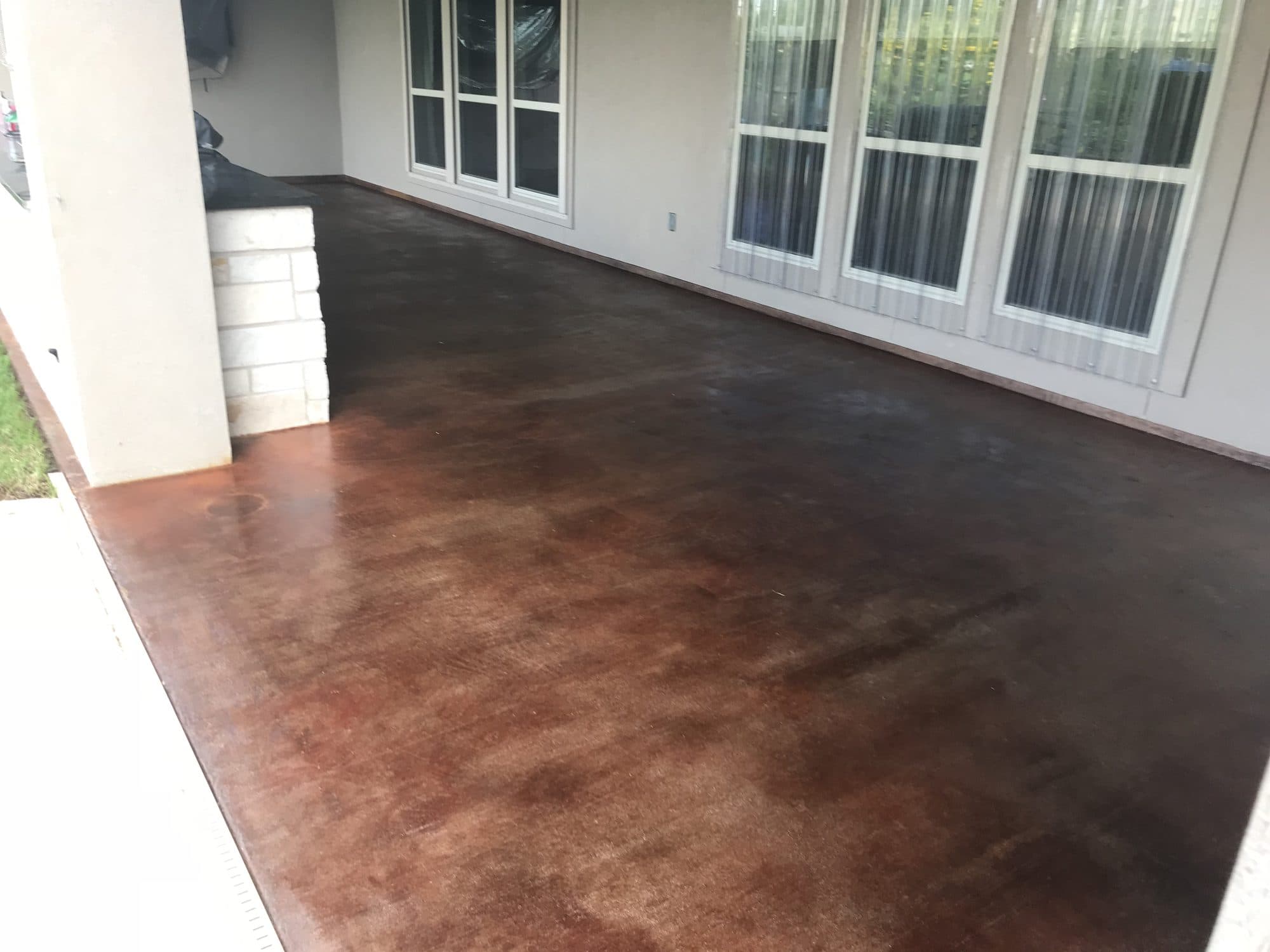
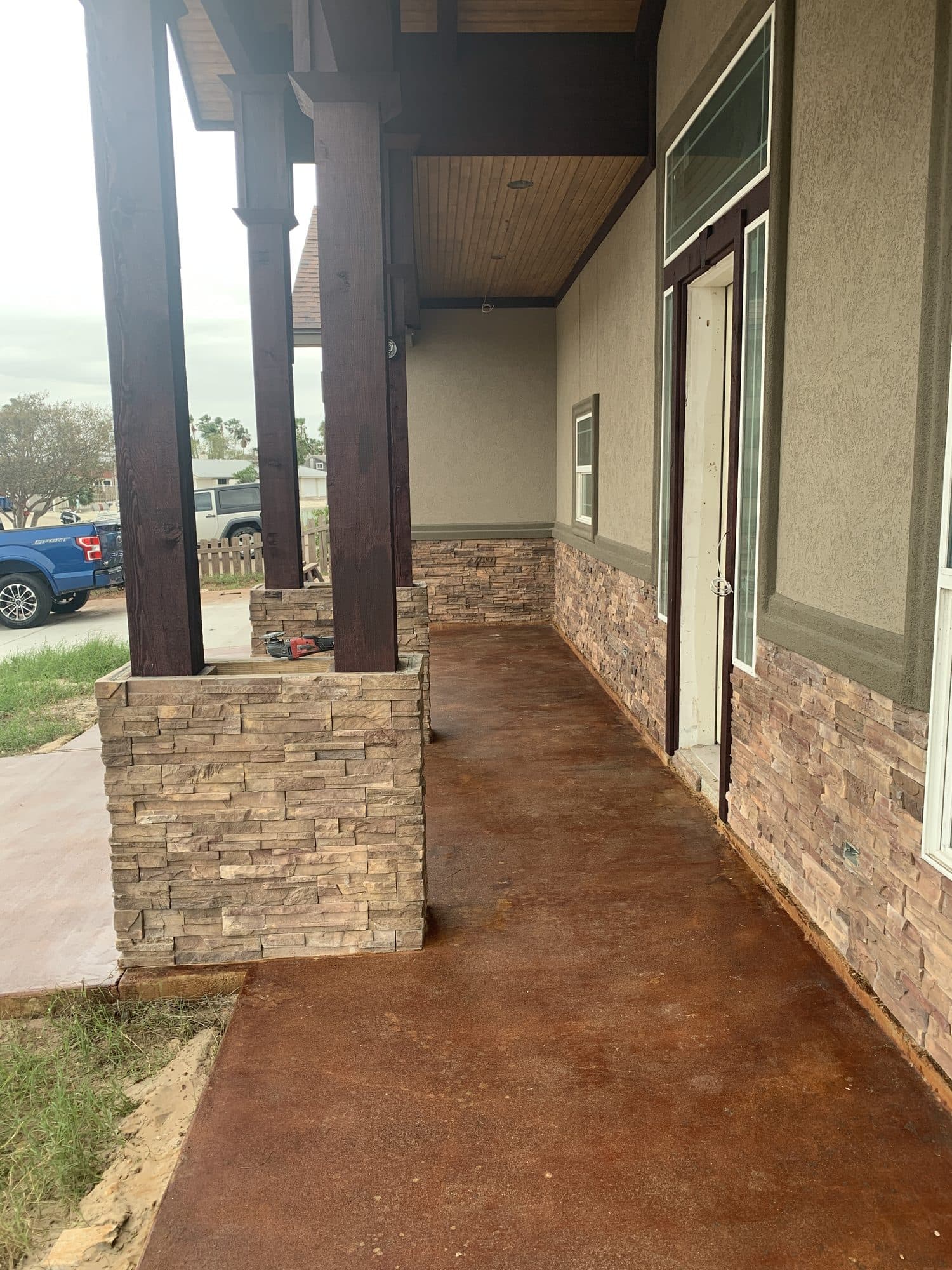
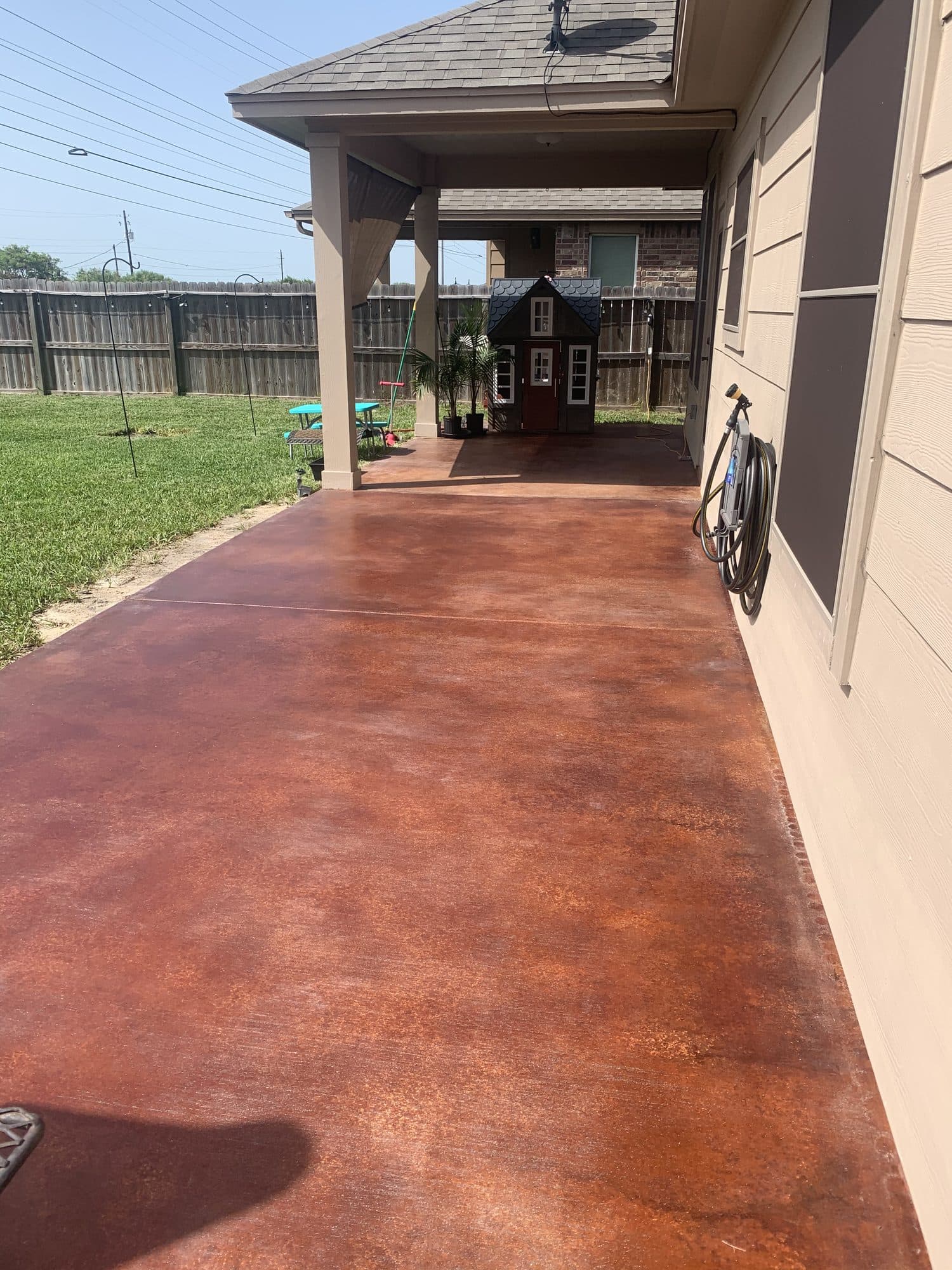
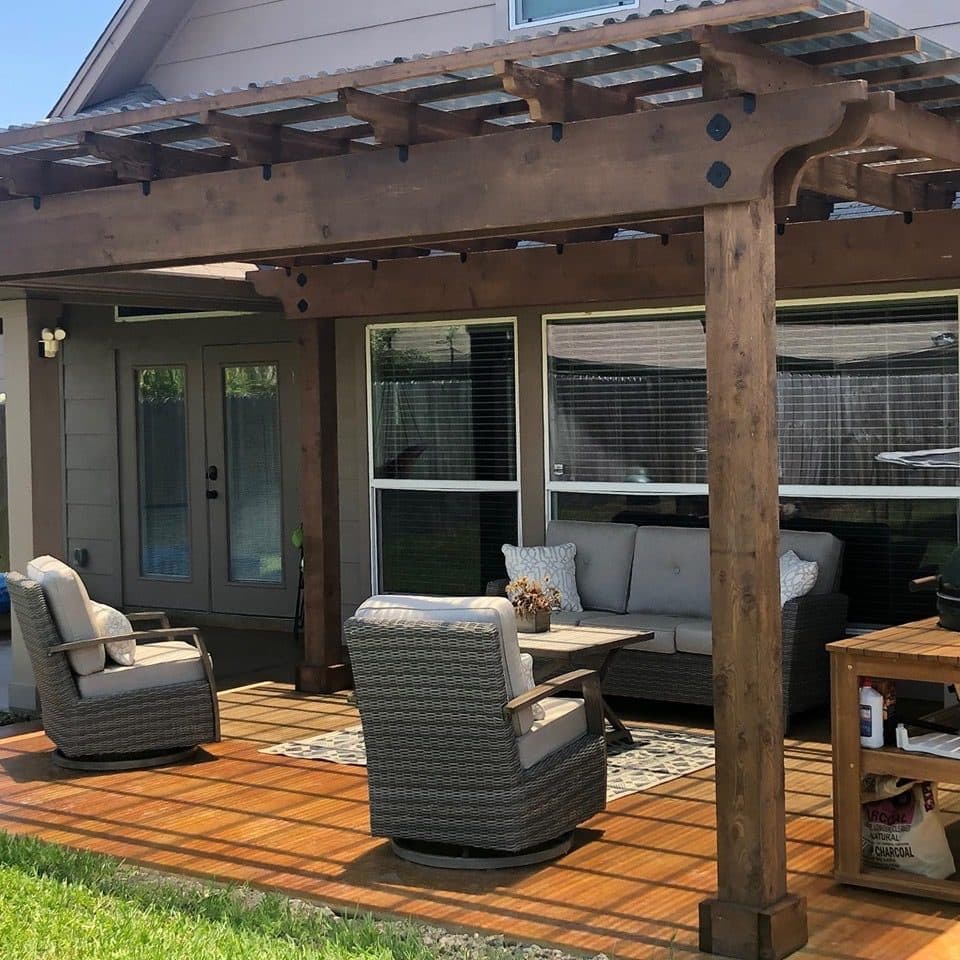
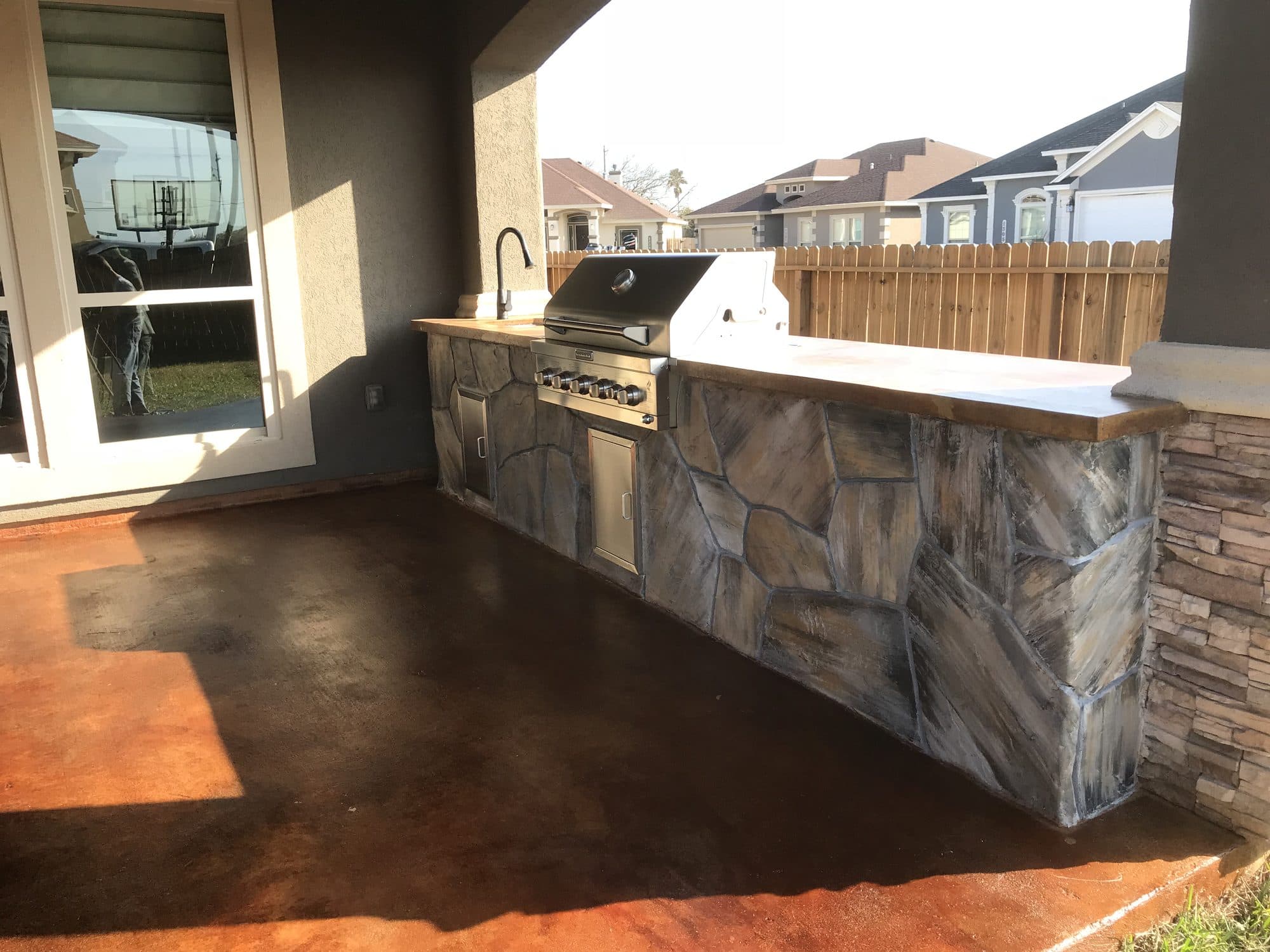
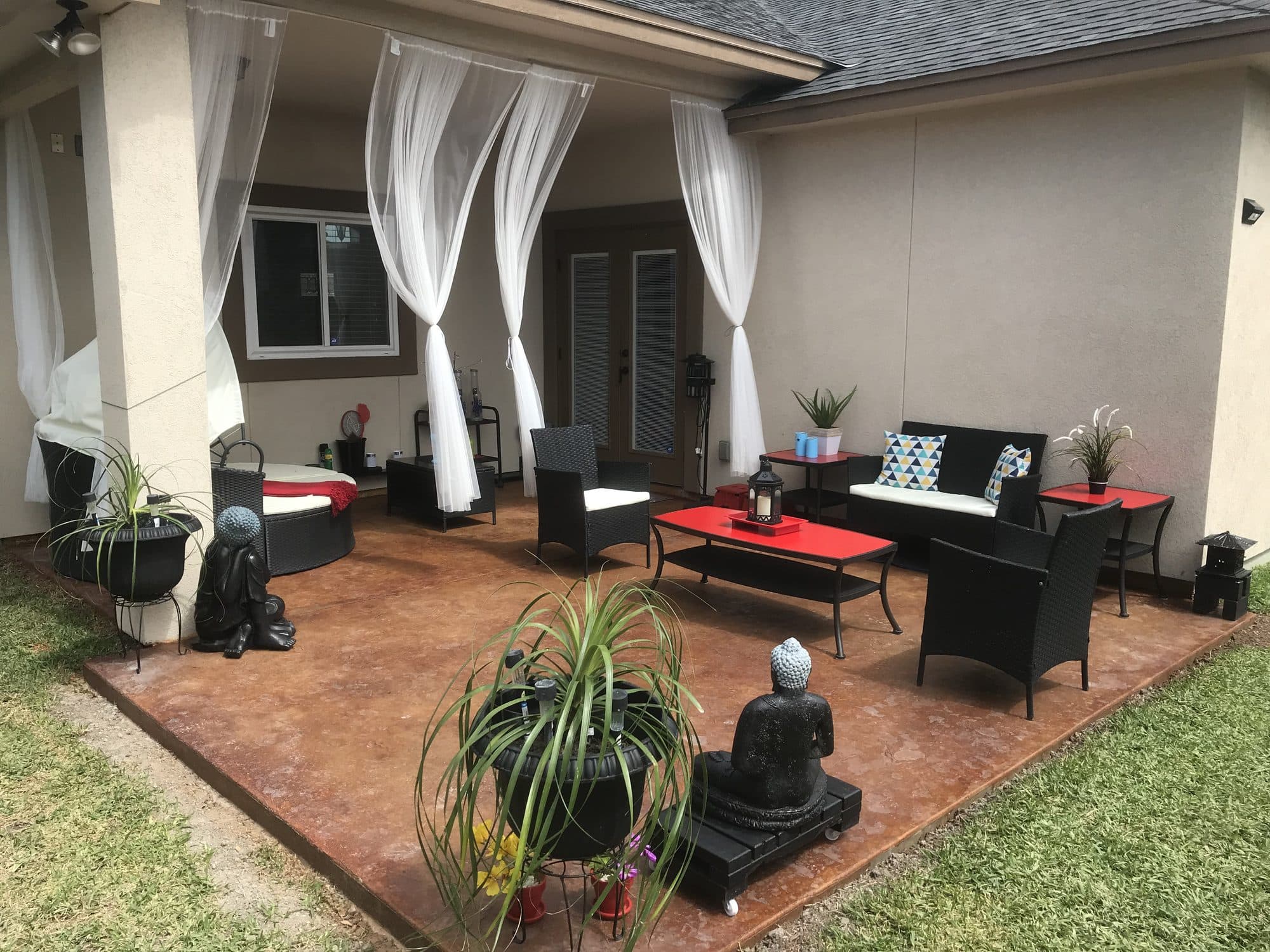
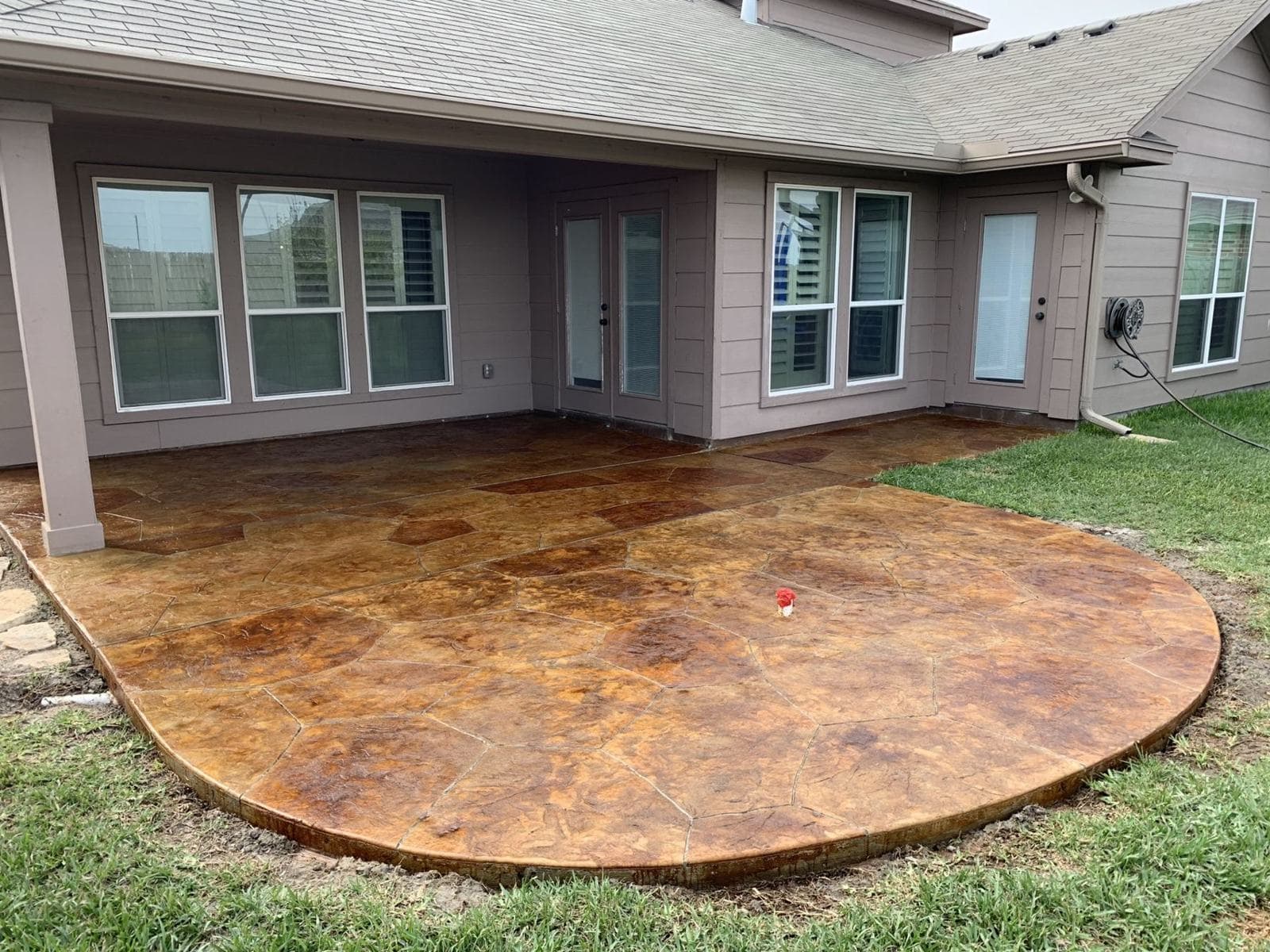
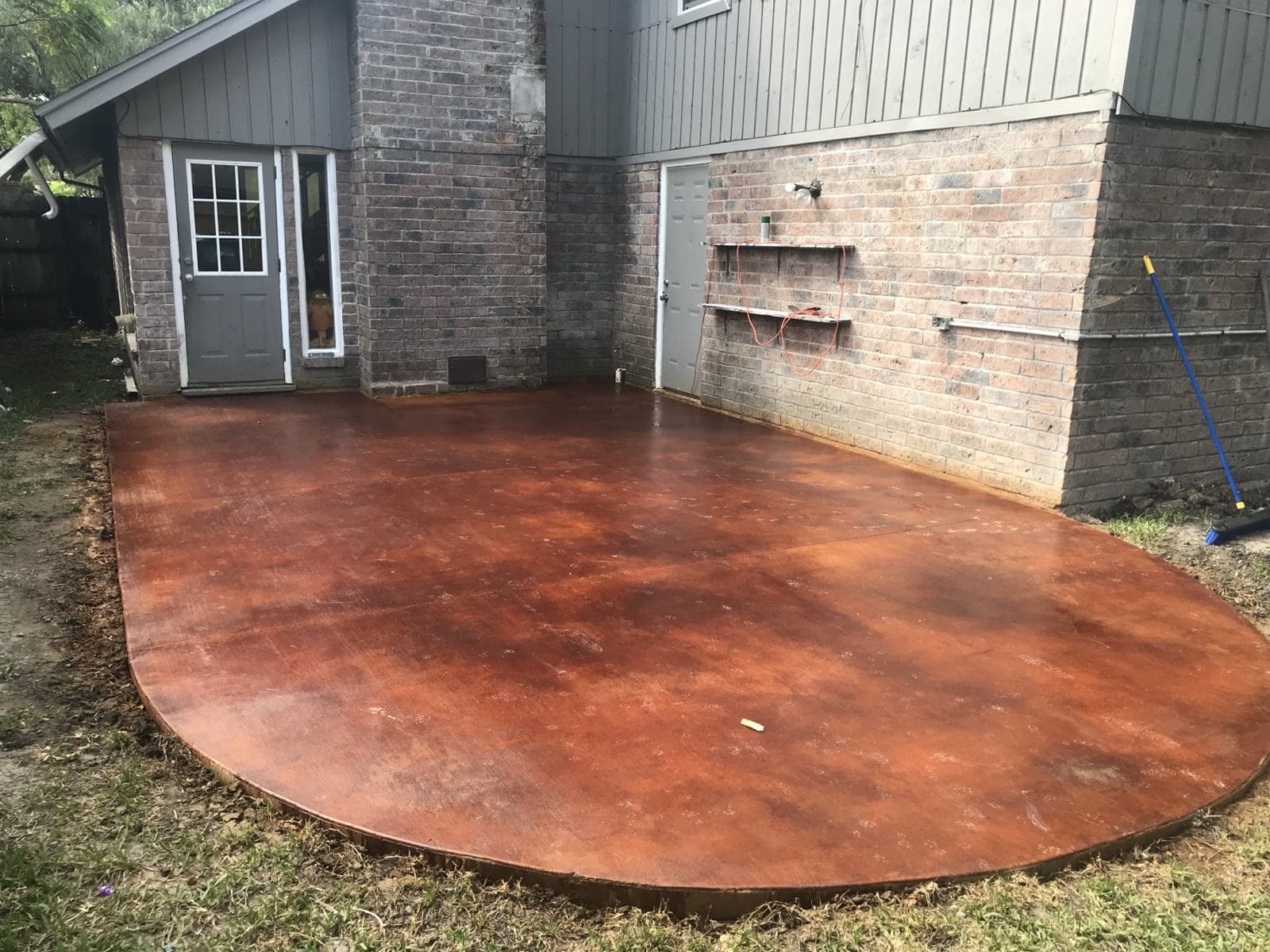
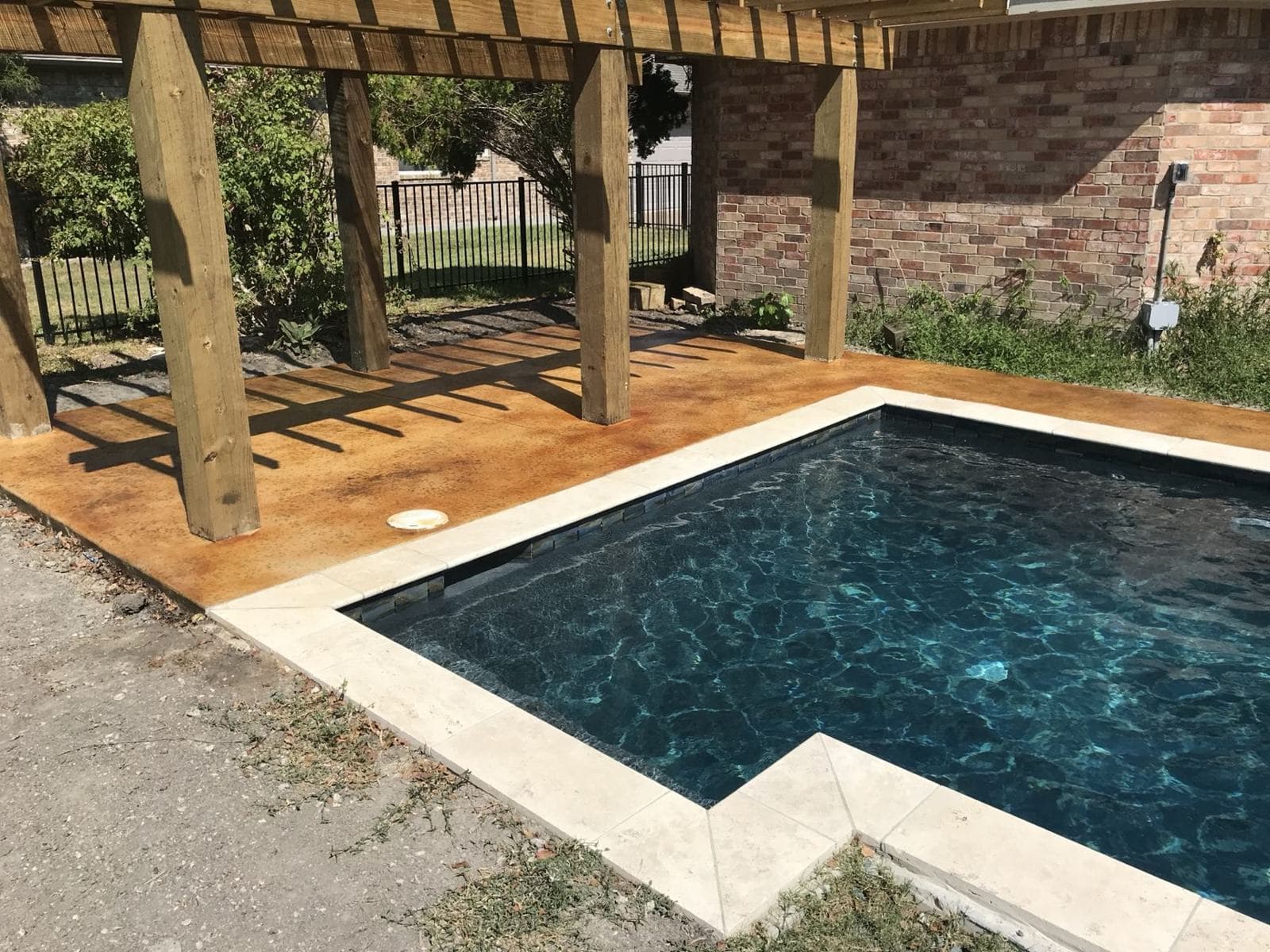
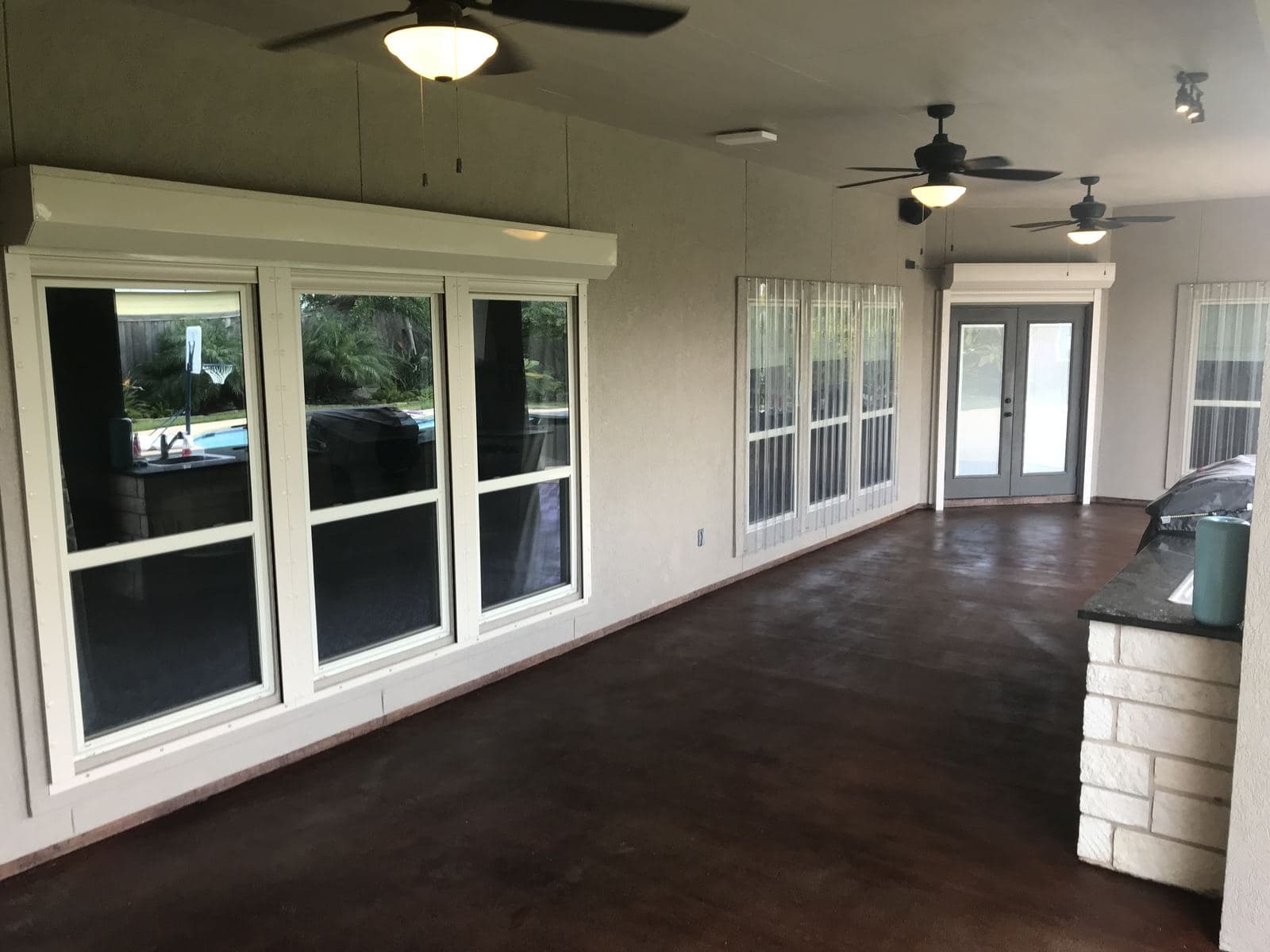
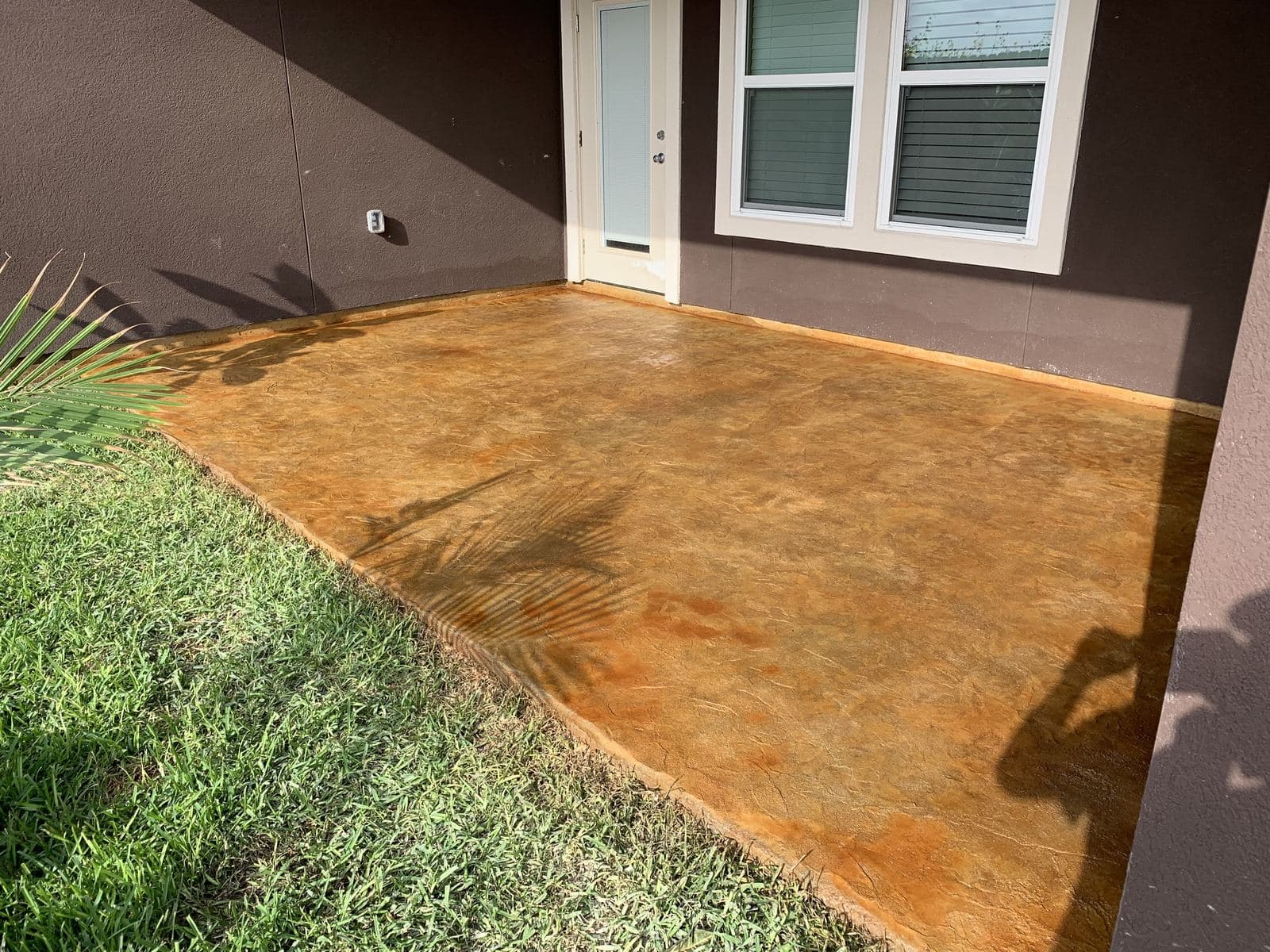
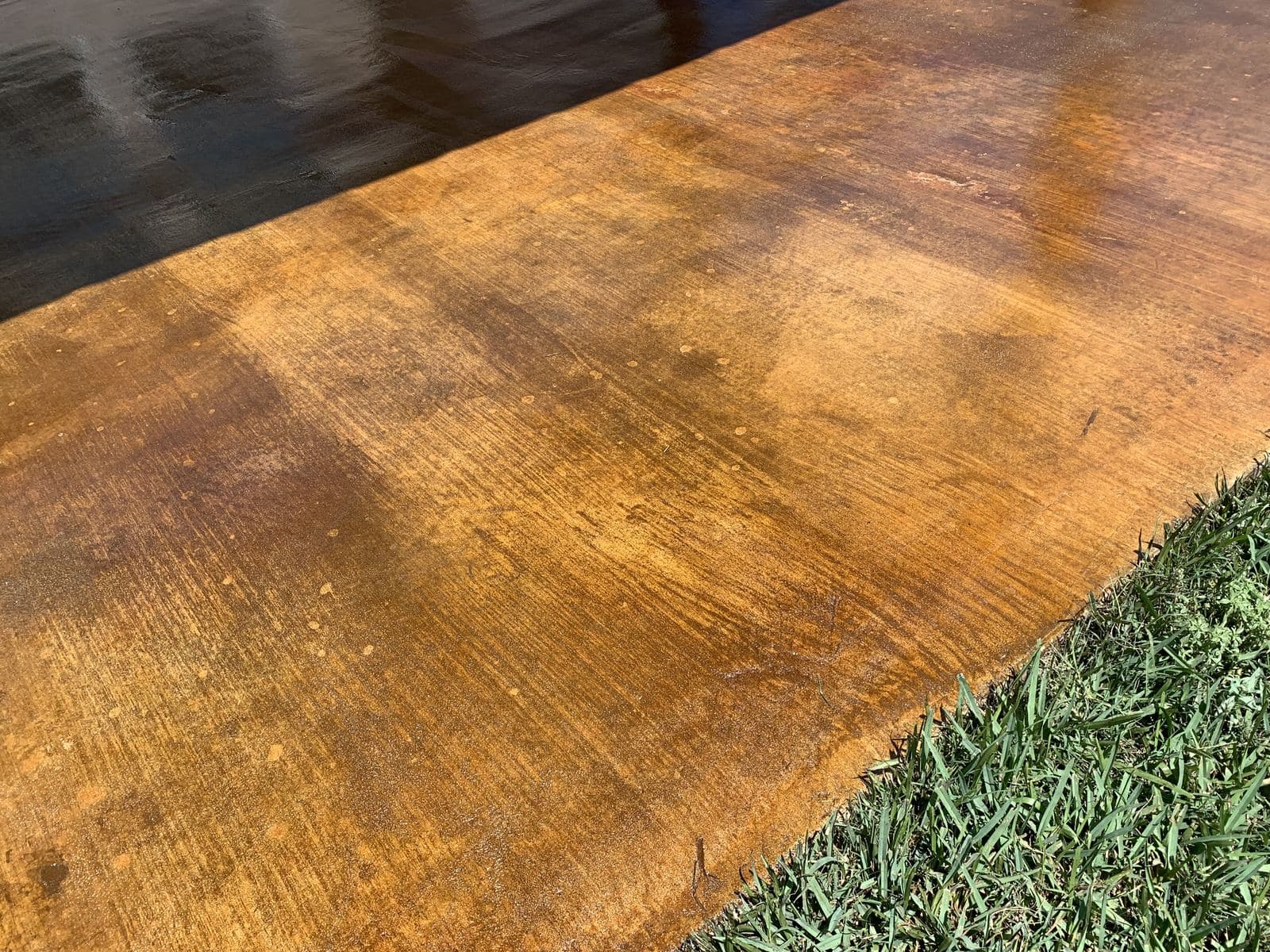
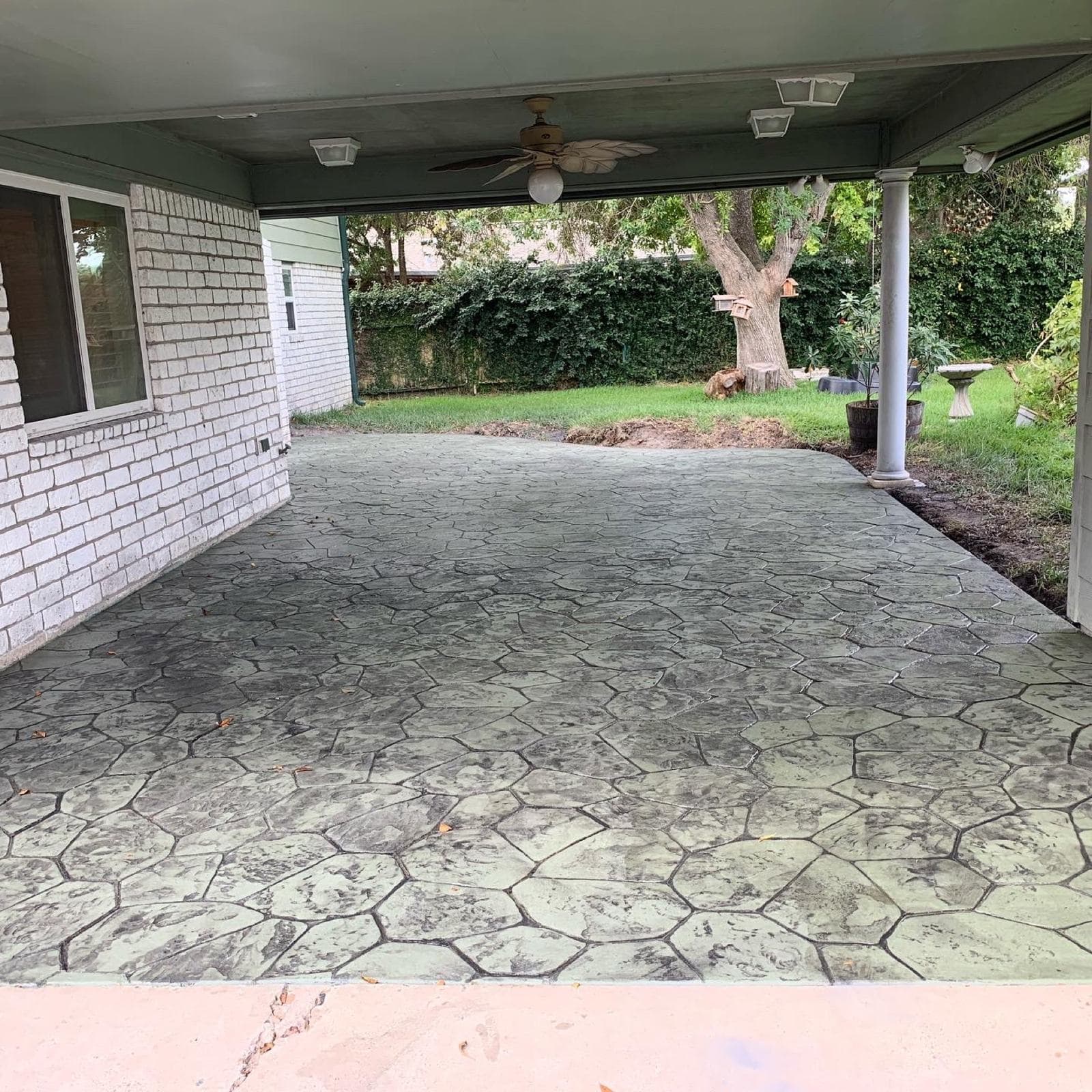
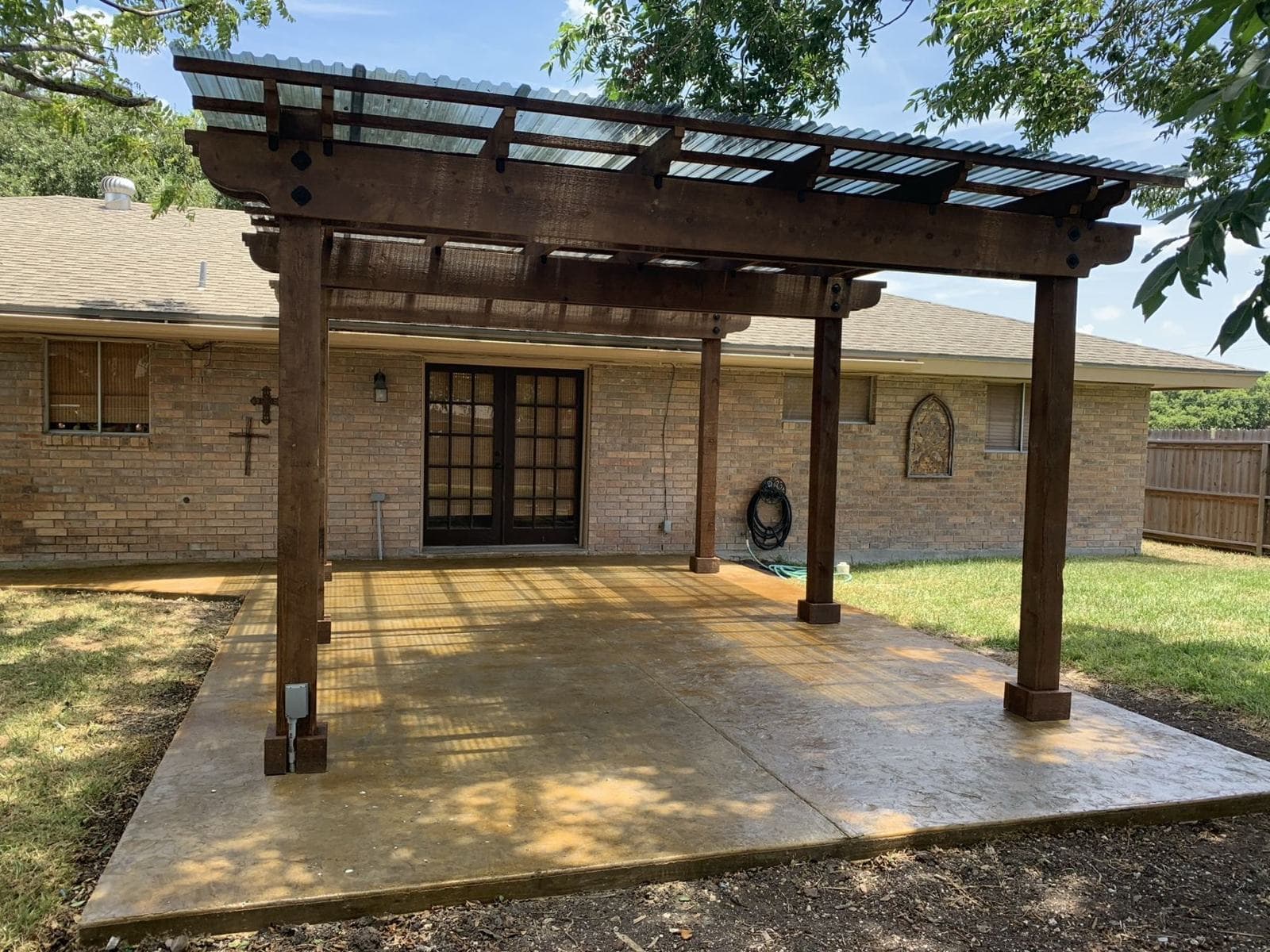
The same product, four very different results. Color depth changes with the age, mix and finish of the slab, which is why we always test a corner first.
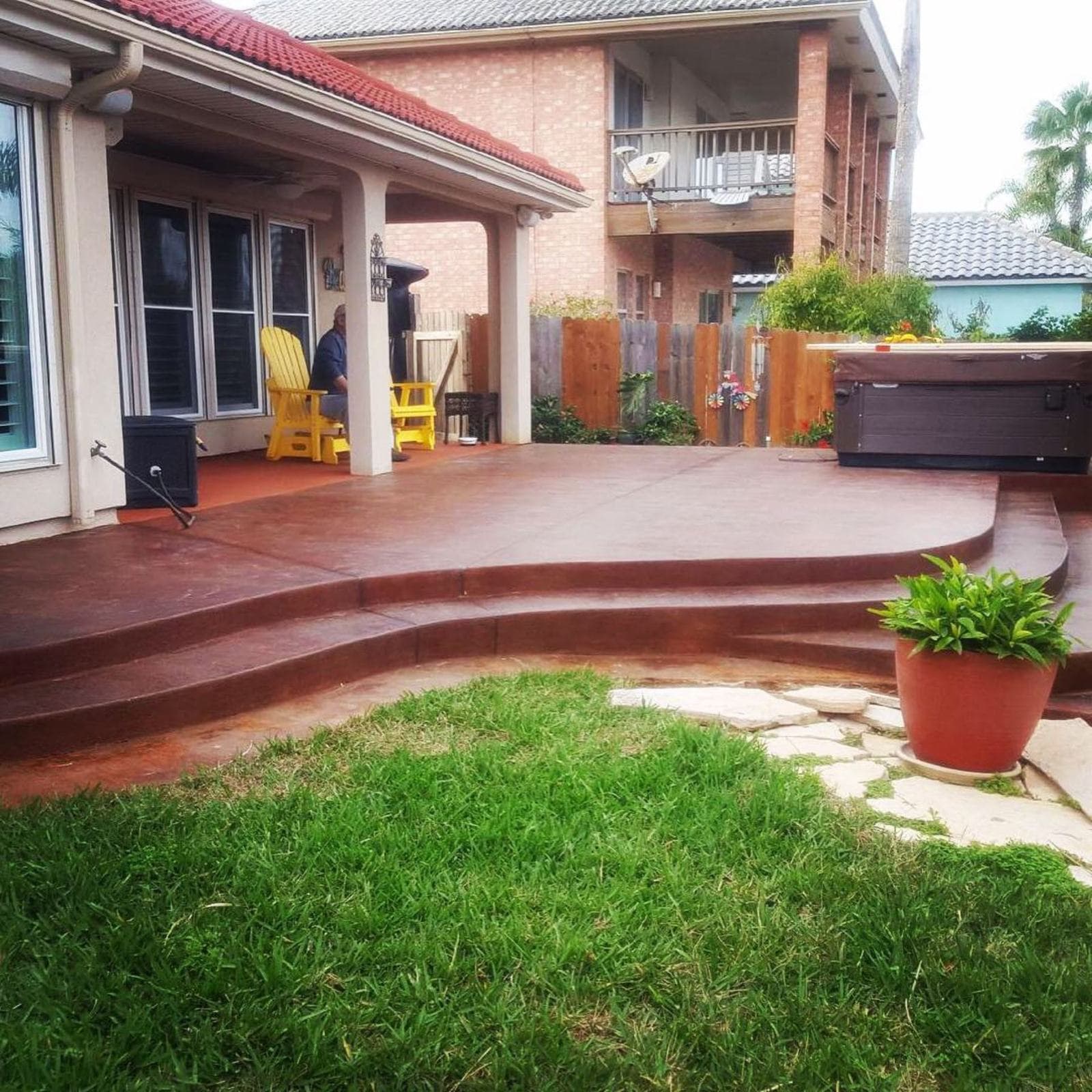
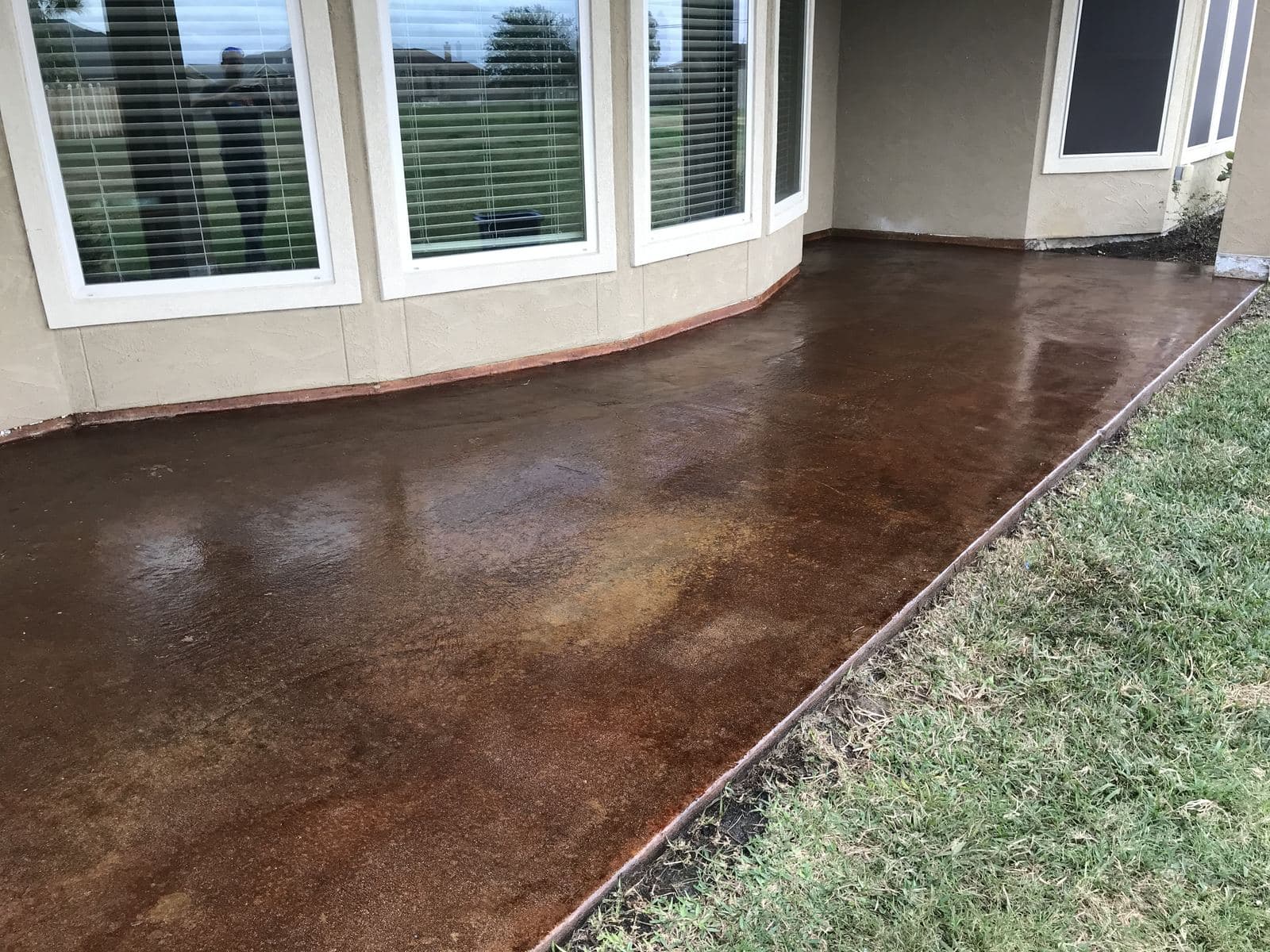
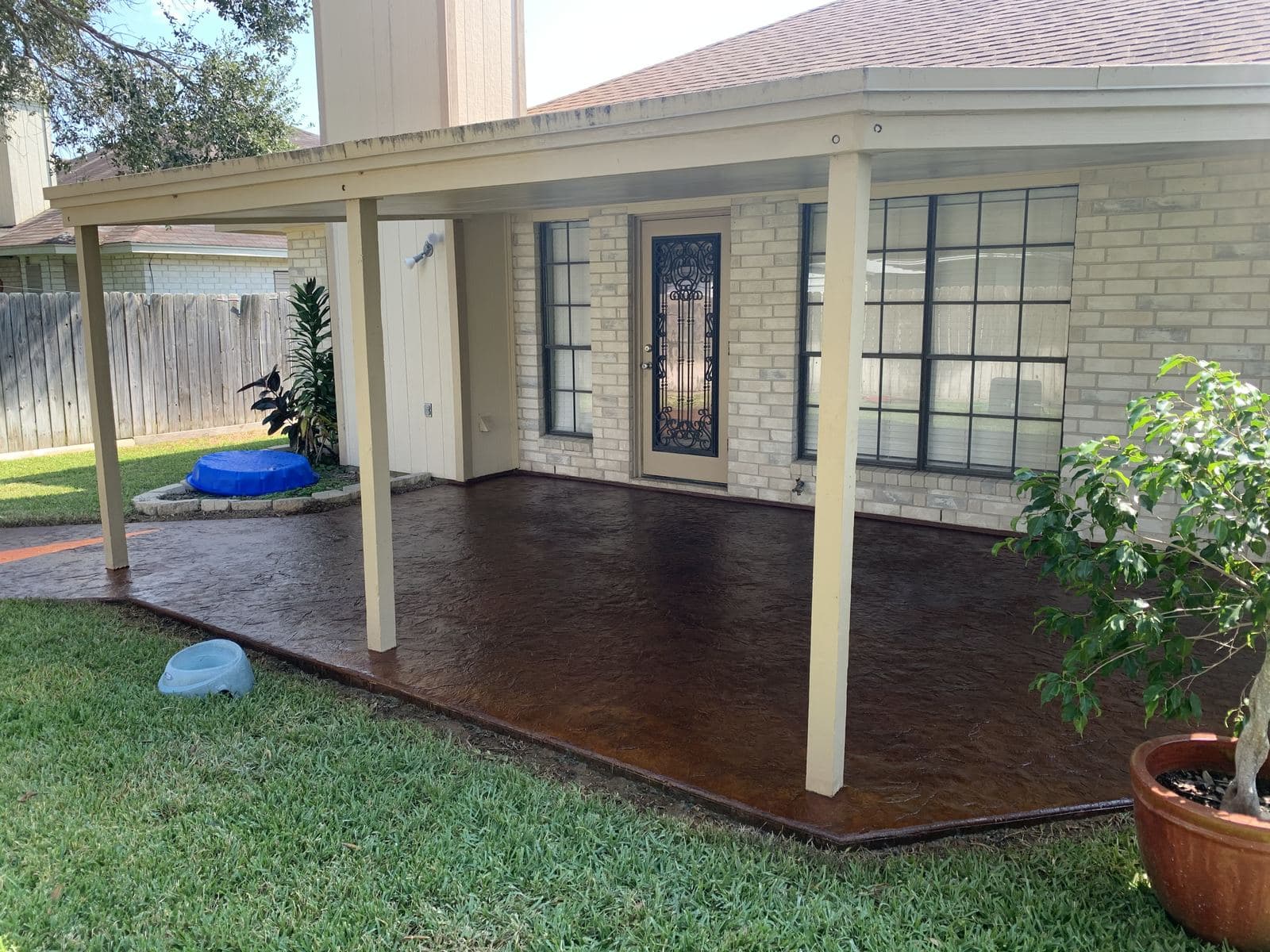
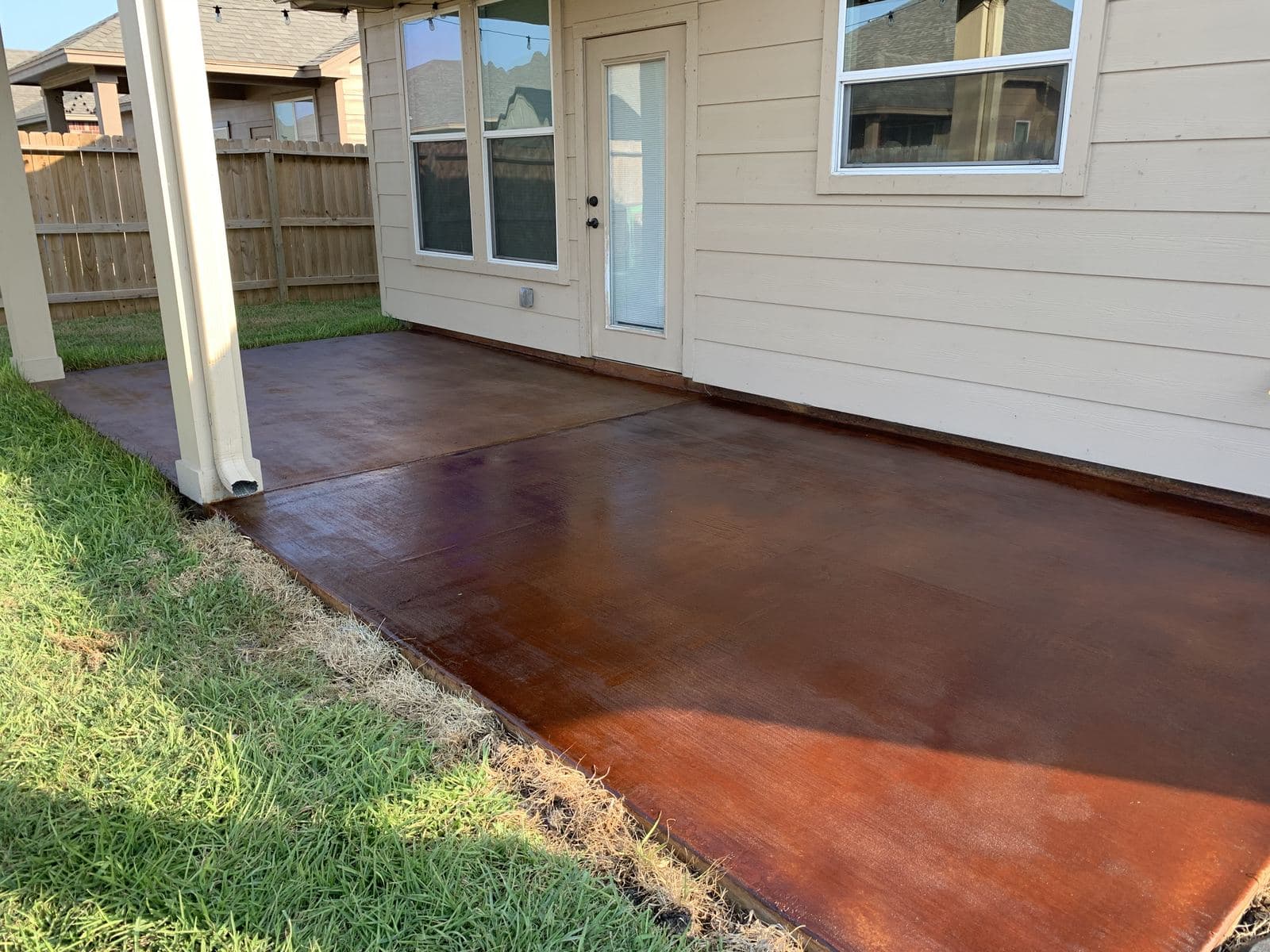
Back patios
The most common request. Warm browns and rusts hide dust and pollen and stay cool enough for bare feet under cover.
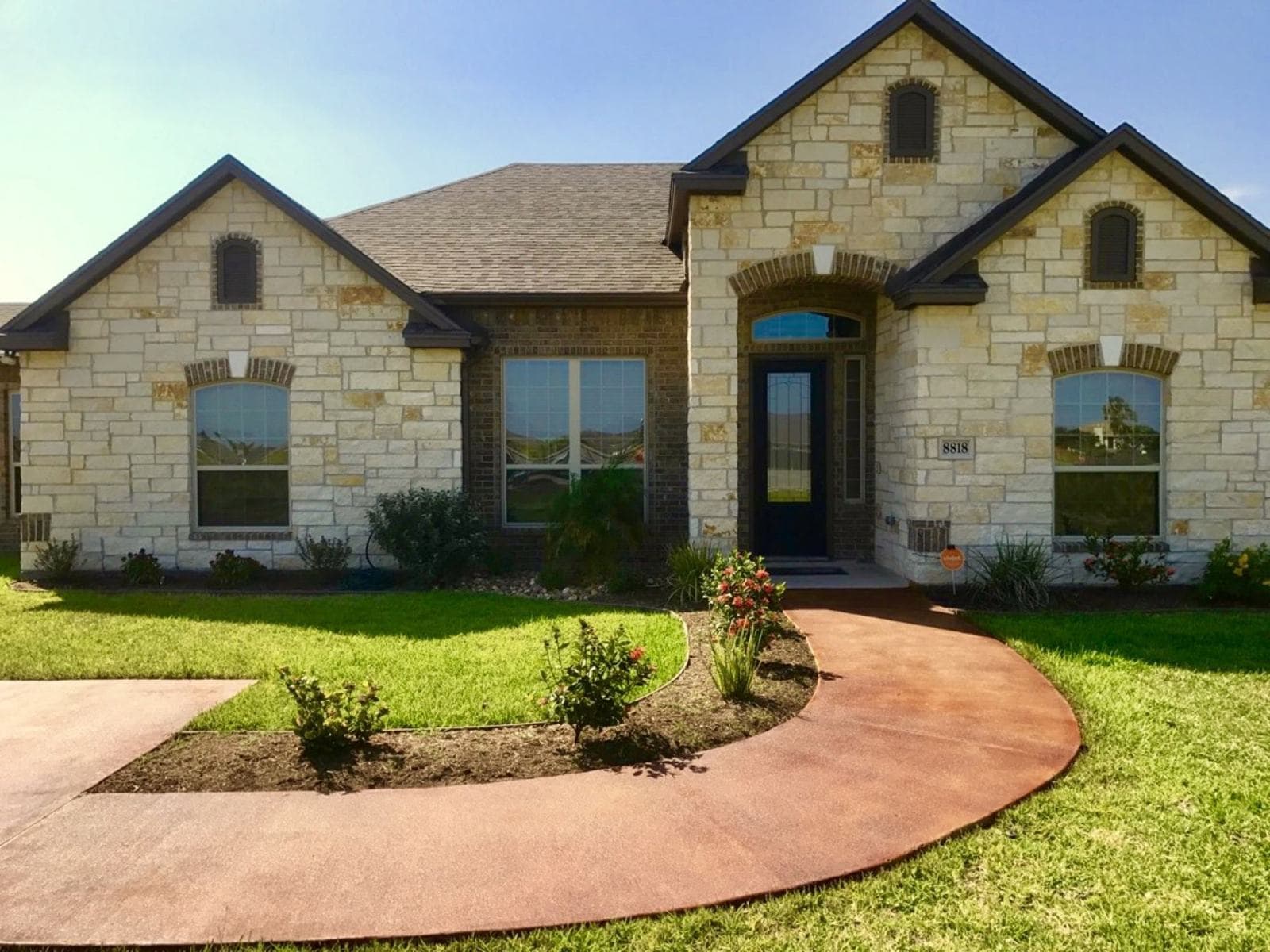
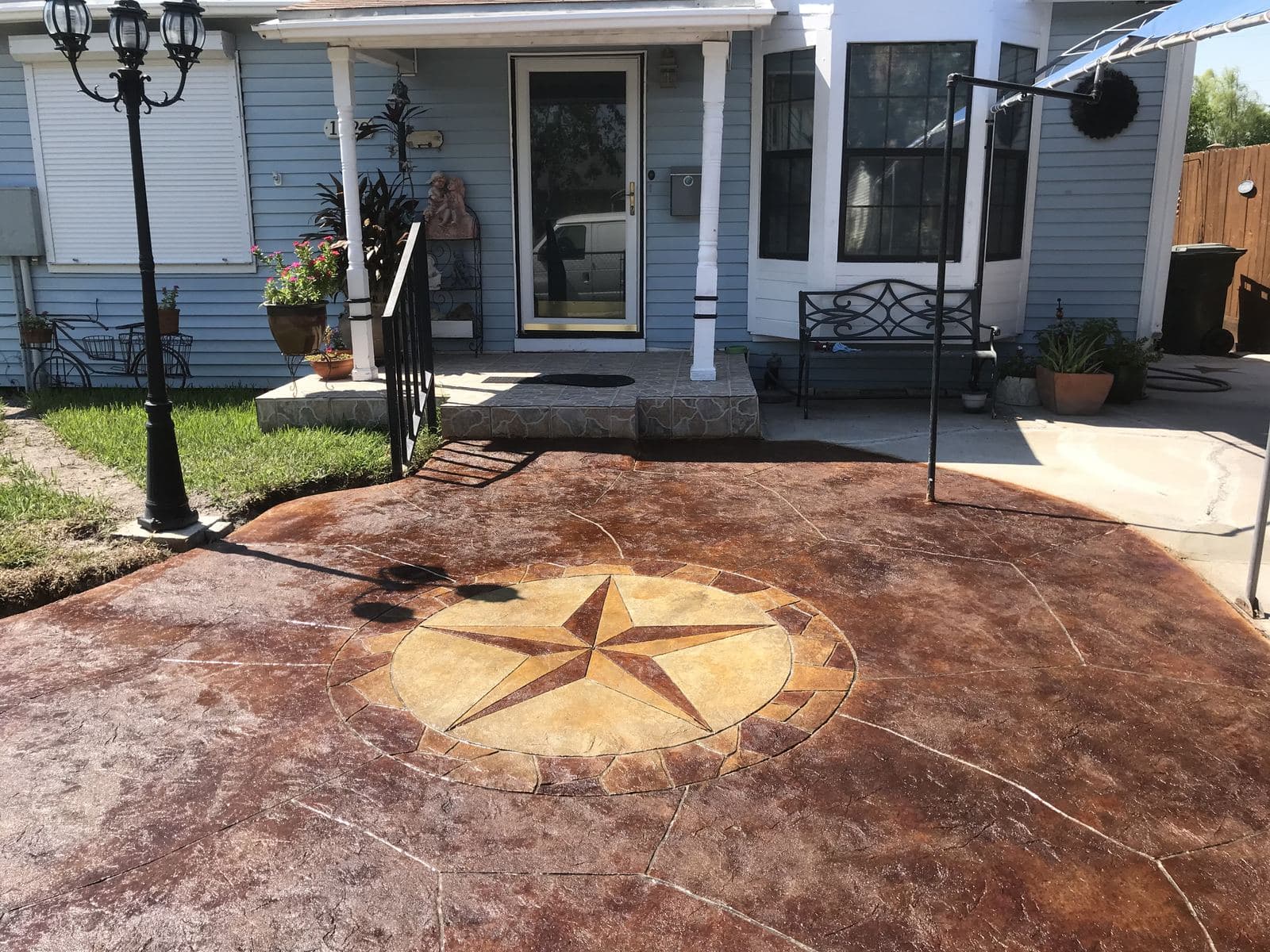
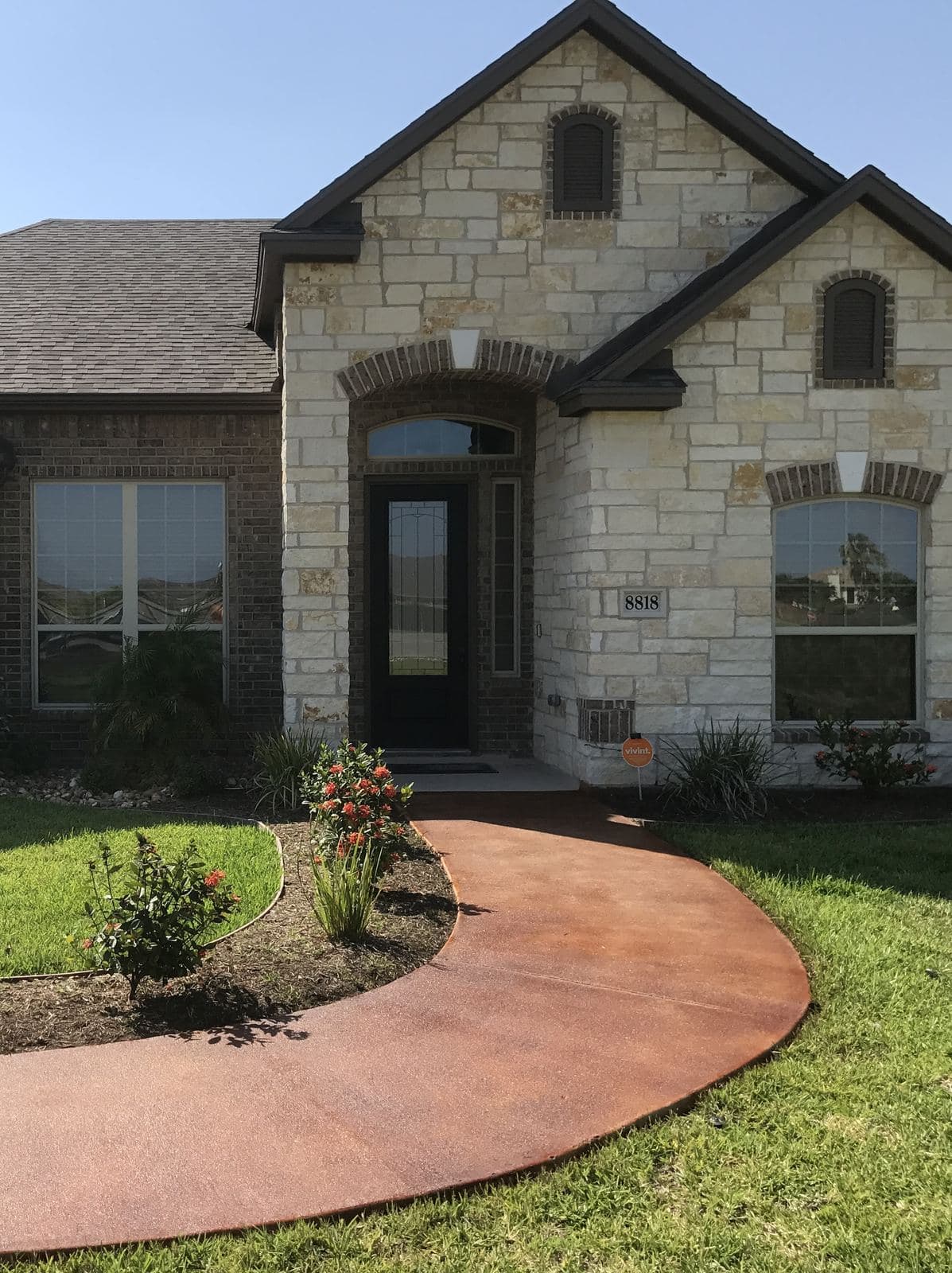
Walkways and entries
A stained ribbon from the drive to the door does more for curb appeal than anything else at the price.
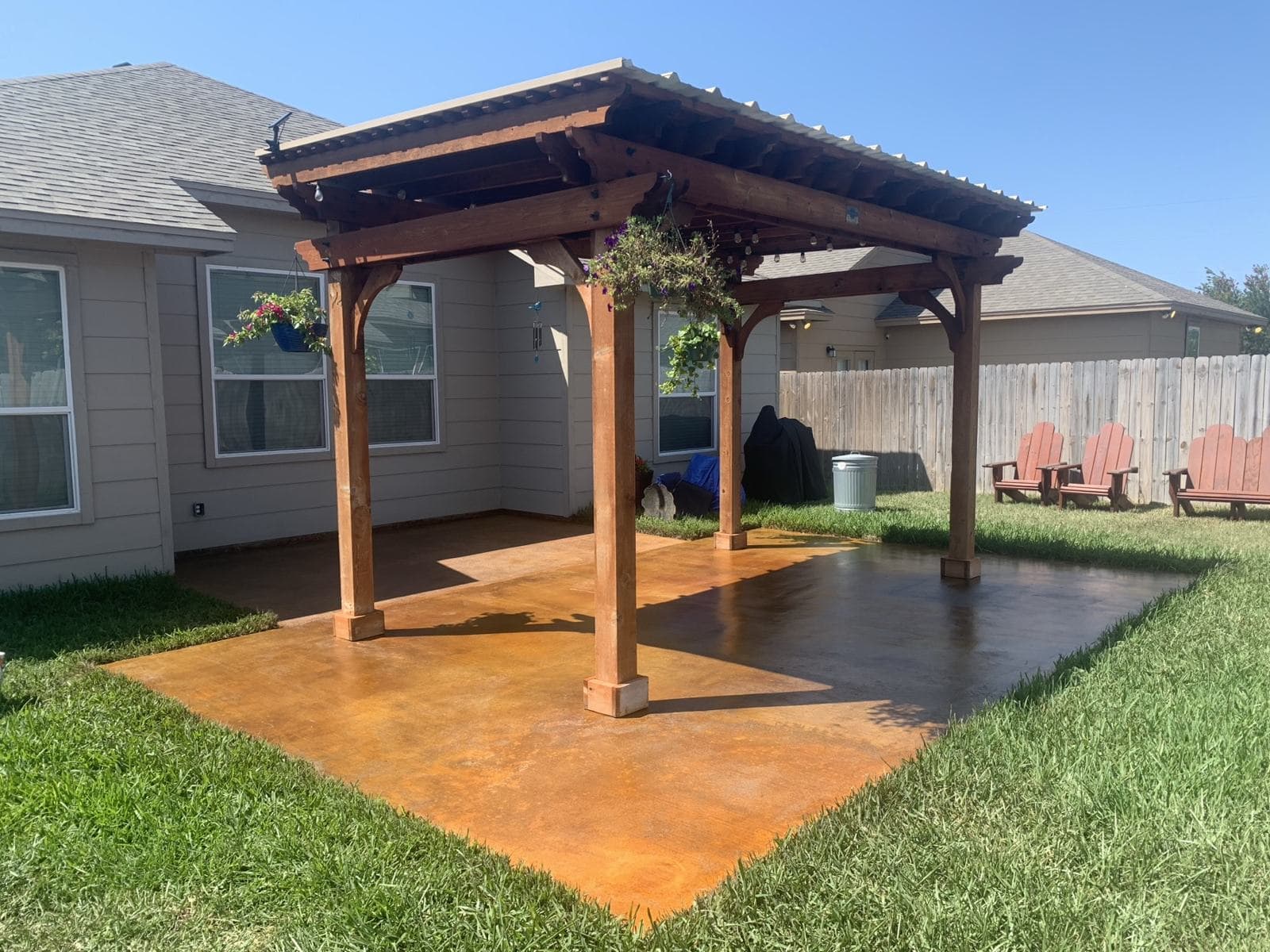
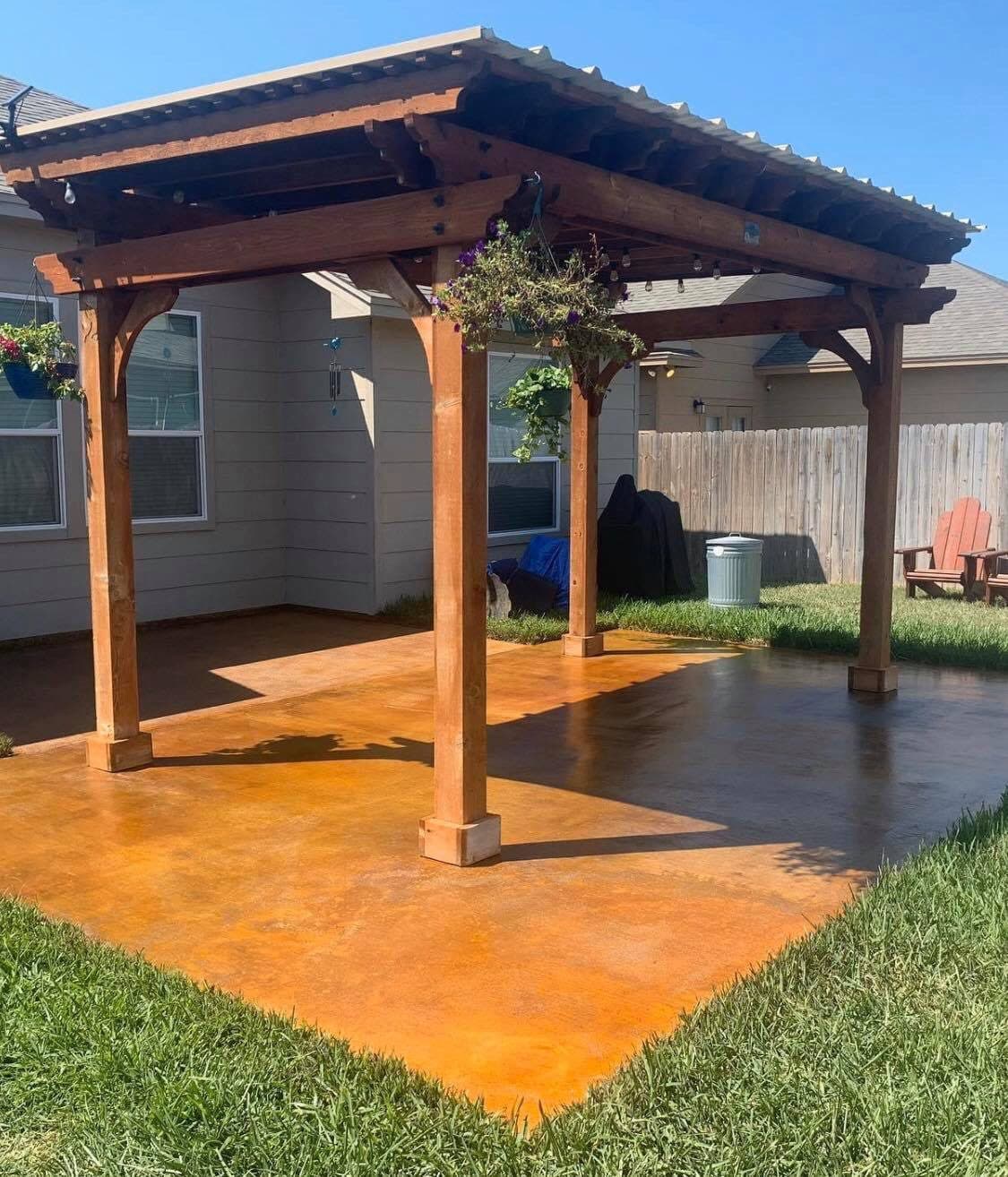
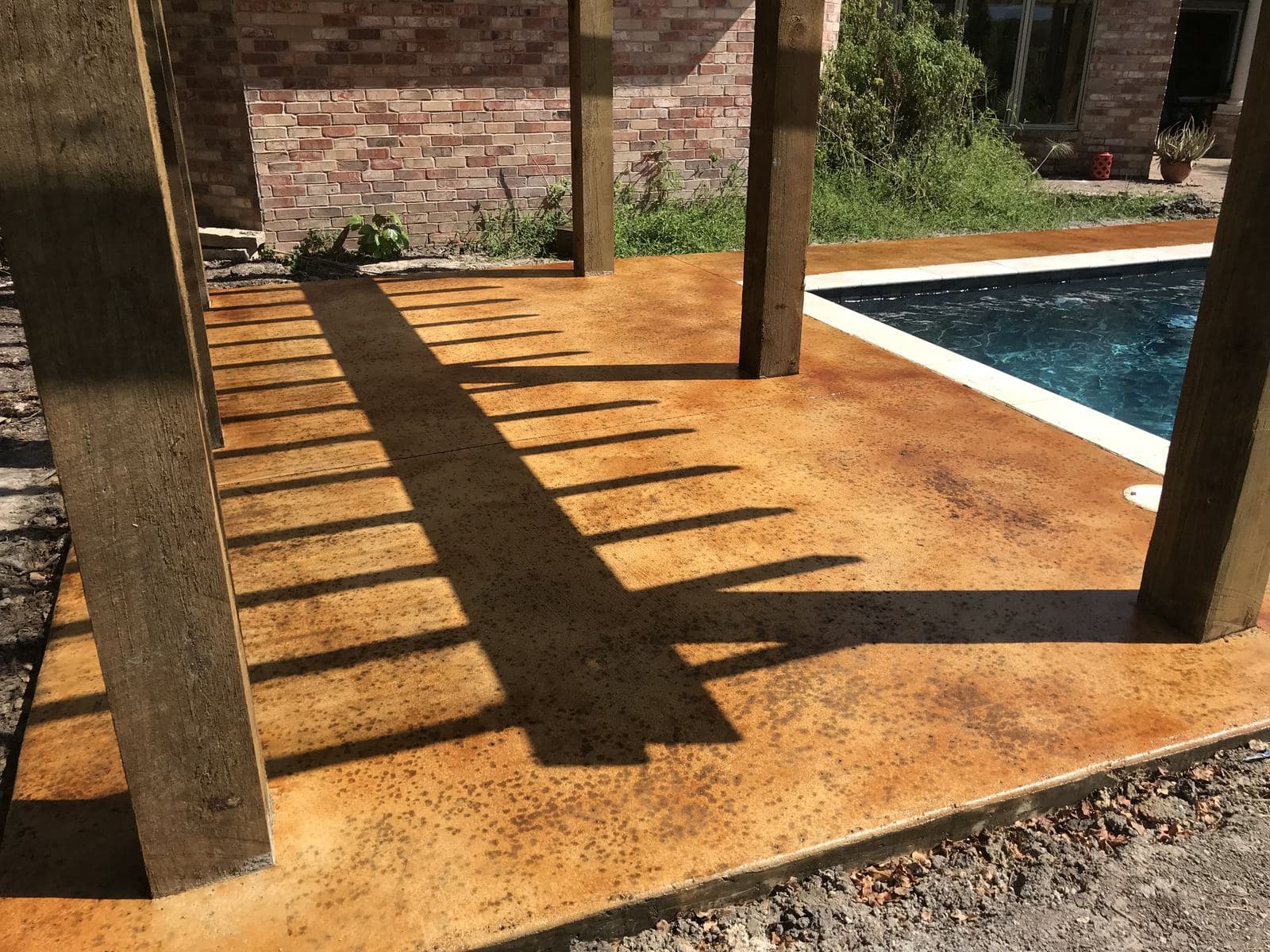
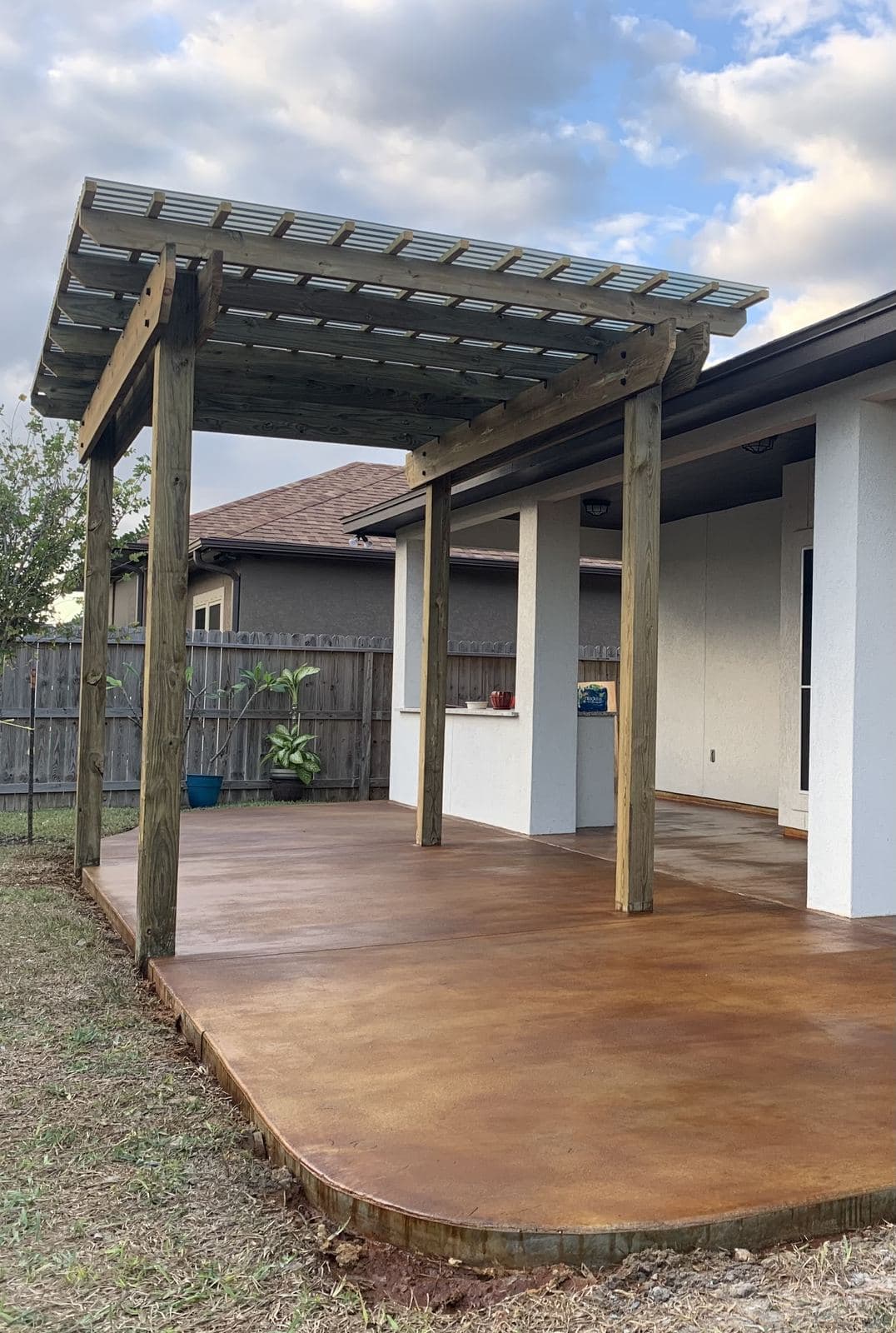
Under a pergola
Shade makes stain look deeper and richer. Stained slabs and cedar are a natural pair.
Colors
The stains we actually use.
We buy EZ Chem. These are their real color lines, not a generic palette — the same jugs that come off our truck and onto your slab.
Earthtone acid stains are double-strength inorganic acid stains that react with the concrete and penetrate the surface, producing colors that resemble natural mineral tones — and last like them.
A chart cannot pick your colour
The colors represented are a guide only. Variations occur with the concrete, the workmanship and the curing conditions. If exactness of color is critical, a job-site test panel should be placed and finished.
That is EZ Chem's wording, and we agree with it. Acid stain reacts with the minerals in your slab, so the same jug of Cola looks different on a ten-year-old patio than on last month's pour. We test first, every time.
When acid stain is the wrong tool: EZ Chem Enviro Stain
Acid stain only makes the colours a chemical reaction can make — earths, rusts, golds, a few greens. For anything outside that, or on a slab too new or too dense to react well, we use EZ Chem's water-based Enviro Stain instead. Same crew, same sealer, much wider palette:
- Black
- Blue
- Brown
- Burnt Orange
- Cola
- Dark Brown
- Dark Green
- English Red
- Green
- Grey
- Khaki
- Light Blue
- Light Brown
- Light Green
- Light Grey
- Malay Tan
- Pink
- Purple
- Red
- Taupe
- Terra Cotta
- Turquoise
- White
- Yellow
How it goes
01
Test the slab
Age, mix and how the slab was finished all change the color. We stain a hidden corner first so you see the real result on your concrete, not a photo of someone else's.
02
Clean and prep
Grease, old sealer and curing compounds all block stain. The slab gets cleaned and, where needed, ground or etched so the stain can bite.
03
Apply the stain
Sprayed and worked by hand for movement and variation. Second and accent colors go on while the first is still reacting.
04
Rinse and vacuum
The residue gets rinsed and vacuumed off — skip this and the sealer will not stick. Most acid stains have to be neutralized first; the EZ Chem stain we use is formulated so it does not, which is one less chemical going onto your slab. If a job calls for a different stain, we neutralize it.
05
Seal and finish
Sealer chosen for where the slab lives: matte or gloss, with a non-slip additive on anything that gets wet. Sealer never goes down on a damp slab — trapped moisture makes it fail or turn milky white, so if the concrete is not dry we come back another day rather than chance it.
What you pay, and when
One honest, fixed price, itemized in writing before we start. Half at signing and half at completion — no progress-payment ladder, no change-order surprises unless you ask us to change something. Keen work carries a one-year workmanship warranty; cracking, color variation and efflorescence are inherent to concrete and are excluded, and we say that up front rather than in the fine print.
Sealer
What goes on
Every stained and stamped slab we finish gets an EZ Chem solvent-based acrylic sealer at 25–30% solids. Solids is the part that stays behind once the solvent flashes off, so a higher-solids sealer leaves a thicker, longer-lasting film than the thin box-store product. Solvent-based rather than water-based because it bites into the concrete and carries the colour deeper, which is what gives a stained slab that wet, saturated look instead of a flat film sitting on top.
Non-slip, where it matters
Where the slab is going to be walked on wet — a pool deck, a shaded patio, steps — we add a non-slip additive to the sealer. It is broadcast into the coat rather than sprinkled on after, so it wears with the sealer instead of off it. If your slab will get wet, tell us and we will spec it that way; it is not an upcharge we spring on you later.
Re-sealing
Sealer is the part that wears, not the colour. On the Coastal Bend we generally look at re-sealing every two to three years, sooner on a slab that bakes in full sun all day or takes salt spray. Your care sheet gives the interval for your job, and we will come back and do it.
Recent acid stain & sealers work
Full gallery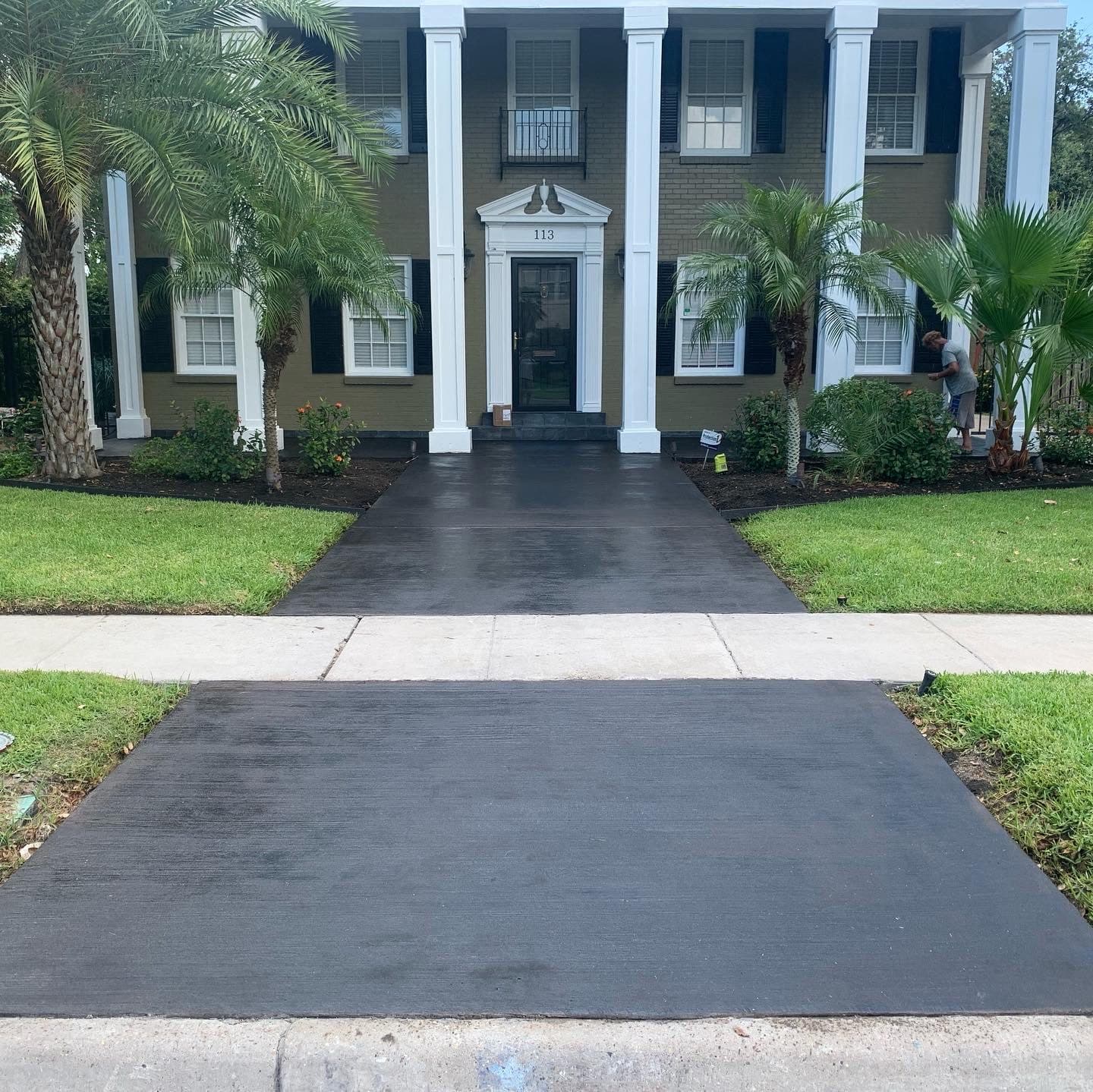
Take it with you
Acid Stain & Sealers care sheet
One page on how to look after it, what will damage it, when to re-seal, and which bits of concrete behaviour are normal rather than a defect. We hand you this on the day; it is here so you can find it again in three years.
Questions
Straight answers, before you call.
Can you stain concrete that is already down?
Usually, yes — that is most of what we stain. The slab needs to be structurally sound and free of coatings the stain cannot get through. We check it on the estimate visit and tell you straight if staining is the wrong call.
Will my color look exactly like the photo?
No, and that is the point. Acid stain reacts with the minerals in your particular slab, so every job comes out slightly different. We test your concrete first so you approve the actual color before we do the whole thing.
How long does it last?
The color is permanent — it is part of the concrete. What wears is the sealer on top, which typically wants refreshing every two to three years outdoors here on the coast.
Can you stain and stamp the same slab?
Yes. Plenty of our best-looking jobs are stamped for texture and then stained for color depth, which is how you get a slab that reads as real stone from three feet away.
How long does new concrete have to cure before you can stain it?
The book answer is twenty-eight days. In twenty years of staining concrete on the Coastal Bend we have found a slab will usually take acid stain beautifully at about a week — the stain reacts with minerals that are in the concrete long before it reaches full strength. What we will not do is guess. We test a hidden corner of your actual slab and look at the real result before we commit to the whole thing. If it is not ready, we wait. Some of this work takes the time it takes, and we would rather tell you that than rush a finish you have to live with for twenty years.
Financing
Financing available.
One short application, 30+ lenders competing, a decision in real time. Projects financed up to $200,000 — deposits and progress payments can also be made by card or bank transfer.
Tell us about your project and we'll come out, measure, and hand you an itemized quote — materials, timeline and total. The price on the paper is the price you pay.
Serving Corpus Christi, Rockport, Ingleside, Kingsville and the Coastal Bend.